You are here: Home  Healing Pulse Mind-Body Techniques Meditation Meditation: Guide to Stillness, Presence & Peace
Healing Pulse Mind-Body Techniques Meditation Meditation: Guide to Stillness, Presence & PeaceMeditation: Guide to Stillness, Presence & Peace
- Details
- Written by Crystal Wind
- Views: 17501

“Discover how stillness returns you home” ~Crystal Wind
Read Time: 5 min | Exclusive Publication | Crystal Wind News Service |
Meditation is often described as an escape from the world, but anyone who practices it consistently will tell you the opposite is true. It is not a way of leaving reality behind — it is a way of finally arriving in it, fully, without the constant narration of the mind pulling you somewhere else.
What Meditation Really Is
At its simplest, meditation is the practice of training attention. That's it. Every tradition wraps this simple act in different language, different postures, and different philosophies, but underneath all of it is the same basic skill: noticing when your mind has wandered, and gently bringing it back. It sounds almost too easy to be meaningful, yet this single repeated motion — wander, notice, return — is what reshapes the relationship between you and your own thoughts over time.
Many people avoid meditation because they believe it requires a completely silent mind, and when they sit down and find their thoughts as busy as ever, they conclude they are doing it wrong. In truth, a busy mind is not a failed meditation. It is the material meditation works with. The goal has never been to stop thinking; it is to change your relationship to thinking, so that you are no longer swept along by every passing thought as though it were an emergency.
A Practice Older Than Any Single Religion
Contemplative stillness practices appear in some form across nearly every culture and era, from early Vedic and Buddhist traditions in Asia, to Christian contemplative prayer, Jewish meditative study, Sufi remembrance practices, and Indigenous traditions of quiet communion with nature. This is worth pausing on: when a practice appears independently across so many unconnected human cultures, it suggests it answers something fundamental in the human condition — the need to occasionally set down the noise and simply be present.
Modern secular meditation, the kind taught in clinics, schools, and wellness apps today, draws heavily on these older lineages while stripping away most of the religious framework. What remains is the technical core: attention, breath, and awareness. This is part of why meditation has been able to travel so widely in the last few decades — it does not require anyone to adopt a belief system, only a willingness to sit still and pay attention.
The Many Forms Meditation Can Take
There is no single correct way to meditate, and part of building a sustainable practice is finding the style that actually suits your temperament. Some of the most widely practiced approaches include:
- Breath-focused meditation — anchoring attention on the sensation of inhaling and exhaling.
- Body scan or somatic meditation — moving attention slowly through the body, noticing sensation without judgment.
- Loving-kindness (metta) meditation — deliberately generating feelings of goodwill, first toward yourself, then toward others.
- Open awareness meditation — resting attention broadly, letting thoughts and sounds arise and pass without following them.
- Walking meditation — bringing the same quality of attention to the physical act of walking, often used by those who find stillness difficult at first.
None of these is inherently superior to the others. A restless beginner may find walking meditation far more accessible than sitting silently for twenty minutes, and that is a perfectly legitimate place to start.
What Happens During a Regular Practice
People who meditate consistently tend to describe a similar arc of experience. In the early weeks, the most noticeable effect is simply becoming aware of how loud and constant the internal monologue actually is — a realization that can feel destabilizing before it feels helpful. With continued practice, many describe a growing gap opening up between a feeling arising and their reaction to it. Frustration still arises. Worry still arises. But there is a beat of space where a choice becomes possible, rather than an automatic reaction taking over immediately.
Over longer periods, many practitioners describe a general lowering of their emotional baseline reactivity, an improved ability to stay present during difficult conversations, and a growing comfort with uncertainty. These are subjective, lived reports rather than universal guarantees, and individual experiences vary considerably — meditation is a practice, not a fixed formula with identical results for every person.
Building a Practice That Actually Sticks
The biggest obstacle to meditation is rarely the practice itself — it's consistency. A few practical anchors make a significant difference. Choose a fixed time, even five minutes, and attach it to something you already do every day, such as right after waking or right before brushing your teeth at night. Keep the bar low enough that you can succeed on your worst day, not just your best one. A five-minute sit done daily will do far more for you over a year than an ambitious forty-minute session you only manage twice before abandoning it.
It also helps to release the expectation of feeling instantly calm. Some sessions will feel restless, distracted, or simply boring, and that is not evidence of failure — it is simply what showing up regularly looks like. The value compounds quietly in the background, often becoming most visible not during the sitting itself but in how you respond to a stressful moment hours or days later.
Common Obstacles and How to Move Through Them
Physical discomfort, a racing mind, sleepiness, and impatience are the four obstacles almost every meditator encounters. Discomfort can often be addressed simply by adjusting posture or trying a seated position with more support, such as a chair instead of the floor. A racing mind is met not with force but with a light, repeated return to the breath or chosen anchor, as many times as needed, without frustration. Sleepiness sometimes signals that meditation should happen earlier in the day, or with eyes slightly open rather than closed. Impatience — the urge to check whether it's working yet — tends to fade naturally once the practice is treated as a long-term relationship rather than a quick fix.
Meditation does not ask for perfection. It asks only for return — the same gentle motion of coming back to the present moment, again and again, for as many years as you choose to keep practicing. That returning, repeated patiently over time, is the entire practice.
Author
The CrystalWind Editorial Team curates practical, well-researched guides on meditation, mindfulness, and contemplative practice for readers at every stage of their journey, drawing on both contemporary research and centuries-old contemplative traditions.
Disclaimer: The information in this article is presented for educational and informational purposes only. Views expressed are those of the contributing author and do not necessarily reflect the views of CrystalWind.ca, which makes no claims regarding the accuracy of any content herein.
© 2026 CrystalWind.ca | All Rights Reserved | Awakening Souls Since 2008
Support: Ko-Fi | PayPal
#CrystalWind #SpiritualJourney #Awakening

Enjoyed this article? Continue your journey with AromaWorx – wellness & aromatherapy , and support us at Support Crystal Wind™ .
Share your thoughts below! 
Recommended Tools & Resources
As an Amazon Associate we earn from qualifying purchases.
Keep CrystalWind.ca free—your gift matters now!
Help us spread light today. Thank you, supporters!

Support CrystalWind
Free spiritual inspiration since 2008
Help keep CrystalWind free and growing with a small contribution.
Buy us a coffee
Donate with PayPal


✨ Digital Treasures ✨
The Crystal Wind Oracle
58-card deck • Lisa Iris art • ⭐⭐⭐⭐⭐
58-card deck • Lisa Iris art • ⭐⭐⭐⭐⭐
Crystal Lover's Handbook
67 crystals A–Z • chakras • healing uses
67 crystals A–Z • chakras • healing uses
Alchemy of Consciousness
Shift your reality from the inside out
Shift your reality from the inside out
Messages from the Archangels
Channeled guidance for your path
Channeled guidance for your path
Starseed Field Guide
Your mission • your origins • your tribe
Your mission • your origins • your tribe
Crystal & Mineral Wallchart
50+ stones • quick-reference • printable
50+ stones • quick-reference • printable
Complete Zodiac Collection
12 Lisa Iris prints • frame it • gift it
12 Lisa Iris prints • frame it • gift it
Zazzle Shop
Prints • posters • puzzles • gifts
Prints • posters • puzzles • gifts
Support CrystalWind.ca
Keep the light on • you have our gratitude
Keep the light on • you have our gratitude
✦ CRYSTAL WIND™ NETWORK ✦
- ✦ AscensionPulse.com — Ascension News
- ✦ LisaIris.com — Visionary Art
- ✦ ReikiWorks.ca — Energy Healing
- ✦ AromaWorX.ca — Aromatherapy
- ✦ Universal.net — Connecting the World
- ✦ NoBody.com — Be a Nobody

The Physical Card Deck
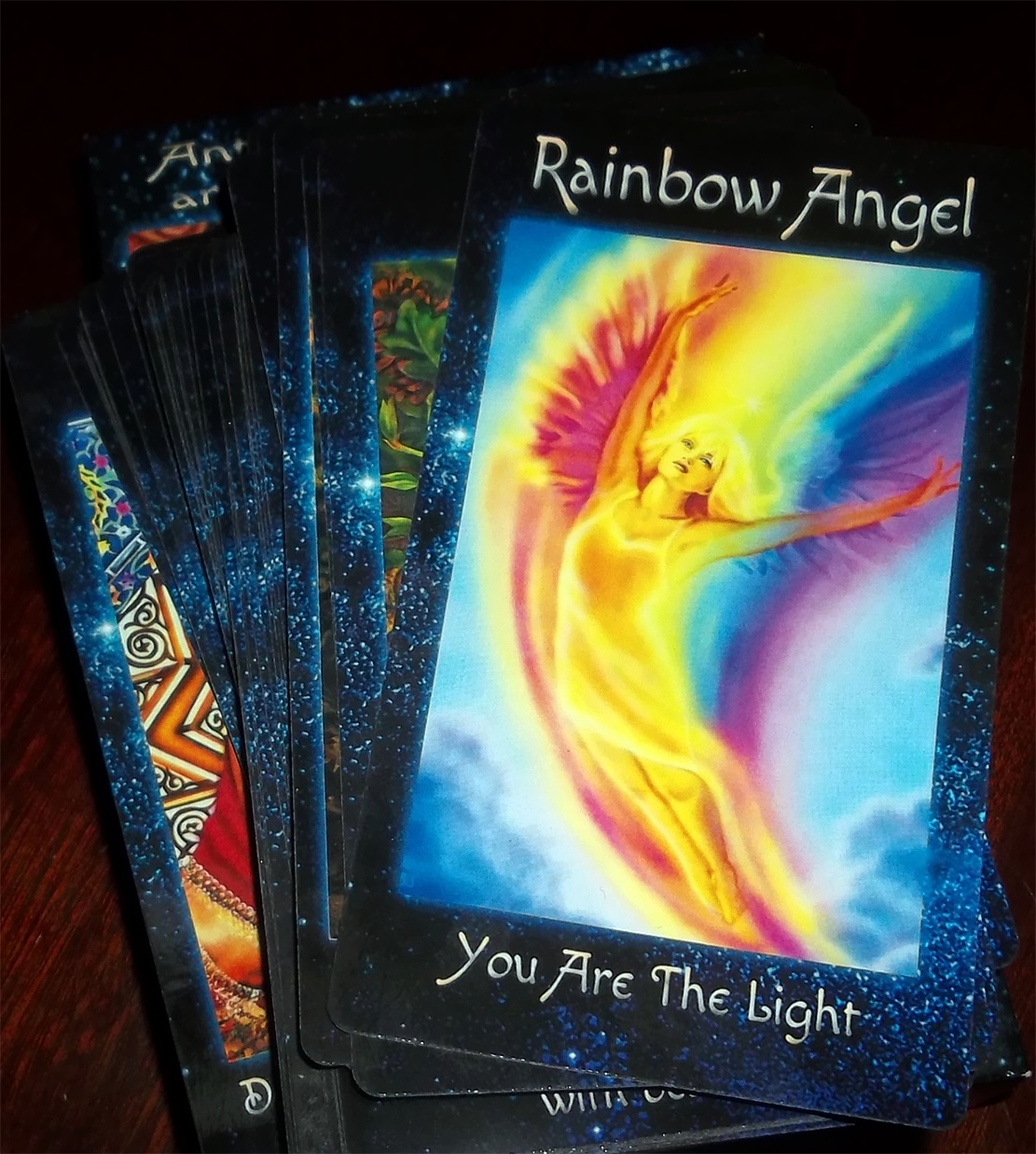
Dive into the Mystical World of the Crystal Wind Oracle Deck! Get All the Enchanting Details Now!
Grab Your Deck Now!NEW Expanded Boxed Edition!
Now with 58 Cards for Richer Wisdom!
The Mobile App

Shatter Illusions - Gain Clarity Now!
Instant Access On:
New! 53-Card Deck for Deeper Wisdom
See What Users Are Raving About!



Thank You for Visiting CrystalWind!
We’re honored to be part of your journey.
Let’s grow together!
If this space has been meaningful, support it here.
Featured This Month
Page:
Sweet Violet

“Discover how violets awaken faithful heart powers” ~Crystal Wind These quiet... Read more
Watermelon Tourmaline

“Discover how rare crystals heal the heart” ~Crystal Wind This rare variety o... Read more
Birth Totem - Bear

“Discover why Bear totem brings deep wisdom” ~Crystal Wind Read Time: 6 min |... Read more
Mabon in Modern Times: Fresh Takes on the Au…

The Mabon season begins somewhere around the 21st-22nd of September and cont... Read more
Sun in Virgo

“Discover how order becomes living grace” ~Crystal Wind This long-form Virgo ... Read more
Virgo Mythology
“Discover why Virgo embodies pure self-sufficiency” ~Crystal Wind The ancient... Read more

Mabon Magic: Ideas For Fall Decoration And R…

Welcome to the season of Fall! As we turn the Great Wheel toward autumn in t... Read more

Harvest Moon

“Discover how these totems foster balance” ~Crystal Wind Standing at the thre... Read more
The Vine: September 2nd - September 29th

“Discover how swan grace steadies restless hearts” ~Crystal Wind As the wheel... Read more
Peridot: The Healer's Stone
Peridot has been used as a Power Stone for centuries. Peridot fosters emotio... Read more
Crystals for Virgo

As the warmth of summer begins to soften into the crispness of autumn, the Sun... Read more
Virgo's Featured Stone - Sugilite
“Discover how sugilite builds lasting confidence” ~Crystal Wind In the realm ... Read more