Keep CrystalWind.ca free—your gift matters now!
Help us spread light today. Thank you, supporters!
 Pathfinder Inspired Paths Inspired Mind Does A Placebo Work If You Know It’s A Placebo?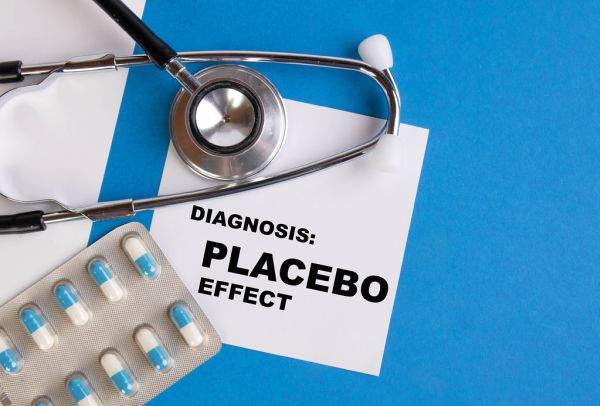
The surprising answer to that question is yes … a lot of the time.
Knowing full well that what they were taking were placebos instead of their normal medication, people have seen improvements in symptoms of IBS, chronic low back pain, migraine, depression, hay fever, ADHD and even fatigue due to cancer.
In each case, there was nothing secretly hidden in the placebos, no secret con, no attempt to deceive the person. The label on the bottle was clear:
Placebo pills
Take two pills, twice a day
These placebos are known as Open Label Placebos (OLP) because it says ‘placebo’ on the label.
In one study, Ted Kaptchuk and Irving Kirsch at Harvard University randomized 80 patients with symptoms of IBS to either receive open label placebos or no treatment.
The OLP group were told that the placebos were “made of an inert substance, like sugar pills, that have been shown in clinical studies to produce significant improvements in IBS symptoms through mind-body self-healing processes.”
They were told that the placebo effect is powerful and that a person’s body can respond automatically to a placebo. They were also told that it was very important that they take their placebos every day and that a positive attitude was helpful, although not essential.
The volunteers faithfully took their placebos twice a day for 21 days and had much lower severity of IBS symptoms both halfway through and at the end of the study.
In a randomized controlled trial of 97 patients with chronic low back pain that was led by Claudio Carvalho at the Institute of Psychological, Social and Life Sciences, in Lisbon, Portugal, and that also involved Kaptchuk and Kirsch, Open Label Placebos produced a sizeable reduction in pain over a three-week period compared with patients who received ‘treatment as usual’, which for many of them meant taking daily painkilling medication.
In fact, in a follow up, patients who had been in the control group and had continued with their usual treatment were then offered placebos in addition to their usual treatment. With the addition of the placebos to their daily regimen their pain now also significantly lessened, and they had much reduced disability.
The same sort of thing happened in an open label placebo study with 74 cancer survivors who were suffering with fatigue. Half the volunteers took two open label placebos twice a day and the other half continued with their usual treatment. The placebo group had in an average of 29% reduction in severity of fatigue and a 39% improvement in fatigue-disrupted quality of life.
As with the back pain study, those in the control group who had received their usual treatment were then offered the placebos and subsequently went on to receive similar levels of improvement as the original open label placebo group did.
You’d be forgiven for being confused as to how placebos can produce such significant effects, especially when those taking them know that they are placebos.
Placebos are usually given blind. That’s the key. It means that the patient doesn’t know it’s a placebo. She or he believes that what they’re taking is the real deal.
In science we’ve come to understand that the person’s belief then causes the effects.
Belief or expectation produce changes in the brain that result in the person experiencing what they believe or expect that they should. This is how the placebo effect works.
But open label placebos are not given blindly, so how can they still work?
There are two reasons, and both contribute to the total effect.
The first is in knowing that there is such a thing as a mind-body connection and that your own mind can and does affect your body.
Recall what the OLP group were told, that the placebo pills “… have been shown in clinical studies to produce significant improvements … through mind-body self-healing processes.”
Knowing that the mind-body connection is real and produces real effects can be enough to trigger expectation that something positive might happen. Then as soon as a person experiences any sort of positive improvement, it intensifies the positive belief.
The second reason is due to the fact that most people have had decades of experience of opening a bottle of pills, swallowing them with a glass of water, and receiving some sort of relief, whether it’s relief from pain, an infection clearing up, a better sleep, or something else. The expectation of obtaining a benefit after taking pills is ingrained in most people’s psyche.
So much so that even when a person takes a placebo, knowing full well that it’s a placebo, the ingrained association between taking a pill and experiencing relief is stronger than the short-term knowing that the pill is only a placebo.
It’s known as conditioning and most people have heard of it through the story of Pavlov’s dog. Each time Dr Pavlov brought food for his dog he rang a bell. Pavlov repeated this over and over again, over many feedings. Eventually, at the sound of the bell alone, the dog would salivate even if Pavlov didn’t have any food.
The sound of the bell had become associated not only with food, but with the dog’s physiological response to the appearance of the food, as in:
Bell : appearance of food : physiological response of salivation
As that association became stronger over time, Pavlov could essentially do away with the middleman. The sound of the bell alone triggered the physiological response of salivation.
And so with routine medication, over and above what is actually in a bottle of pills, we have come to associate relief of symptoms with the action of picking up the bottle, opening it and swallowing the pills with water. The association has become ingrained over years.
So even though a person knows they’re taking a placebo, the association of ‘take pills : get relief’, built up over years, is enough to produce the physiological effects expected from what some real drugs would produce.
A potential cost saving
This also hints at a potential cost-saving benefit for individuals and health services around the world. For many people experiencing pain, IBS, hay fever, even depression or fatigue, there might be some benefit in swapping every other dose of medication with an Open Label Placebo or even giving placebos with a reduced dose of their main medication.
This hasn’t been formally researched yet (to the best of my knowledge), but there’s hints of the likely success within OLP studies. For example, those with chronic low back pain and cancer related fatigue received more relief when combining their usual medication with open label placebos than from their usual medication alone.
We have an ingrained association between ‘more medicine equals more relief.’ This can even be seen with conventional blinded drug trials. In these studies, people receiving four placebos get more benefit than people who only get two placebos. It’s the ‘more is better’ association we’ve all come to learn.
While ‘more is better’ is usually concerned with ideas of waste and overconsumption, perhaps it can be turned to good use here and reduce some expense for individuals and health services by sometimes reducing the amount of medication required.
Similarly, perhaps some people who regularly have to take painkillers might benefit from swapping the occasional dose with Open Label Placebos.
Next time I have a need for paracetamol, I think I’ll reach for a bottle of placebos and try them out for myself.
Further information: If you wish to read more about the placebo effect, how it works, examples of it, as well as more on open label placebos, see my book, ‘How Your Mind Can Heal Your Body‘ (10th Anniversary edition, Amazon rating: 4.6 from 646 reviews as of 5 July 2022)
© 2022 crystalwind.ca. All rights reserved.

Liked this article? Dive deeper into personal growth and wellness! Check out CrystalWind.ca for spiritual wisdom or explore AromaWorx.ca for natural well-being tips. Spread the positivity—share this with friends on their happiness journey!
Let’s Chat! Drop Your Thoughts Below! 

Imagine a world of inspiration and healing, free for all—made possible by YOU!
Donate Now—Ignite the Magic at CrystalWind.ca!

Your donation can make a difference!
Help us find a cure – donate now!


The god Lugh was worshiped in Ireland as a deity of the sun. This connection... Read more

Echos Of The Ancestors Abalone strengthens the structure of the body and th... Read more

The Stone Of Orators Chalcedony was very popular as a decorative stone in ant... Read more

The Mythology of Cancer: A Celestial Tale of Loyalty and Sacrifice Among th... Read more

Egyptian astrology was one of the earliest forms of astrology. The Egyptians w... Read more

Although in the heat of a Mid-western summer it might be difficult to discer... Read more

Cancer Sun Sign Characteristics Overview The name "Cancer" comes from Latin, ... Read more