
The Many King Arthurs of the Britons
- Details
- Written by AndEl
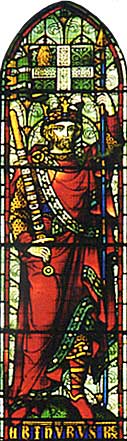 Arthur, King of the Britons
A biography by David Nash Ford
Arthur, it seems, is claimed as the King of nearly every Celtic Kingdom known. The 6th century certainly saw many men named Arthur born into the Celtic Royal families of Britain but, despite attempts to identify the great man himself amongst them, there can be little doubt that most of these people were only named in his honour. Princes with other names are also sometimes identified with "Arthwyr" which is thought by some to be a title similar to "Vortigern".
Breton King
Geoffrey of Monmouth recorded Arthur as a High-King of Britain. He was the son of his predecessor, Uther Pendragon and nephew of King Ambrosius. As a descendant of High-King Eudaf Hen's nephew, Conan Meriadoc, Arthur's grandfather, had crossed the Channel from Brittany and established the dynasty at the beginning of the 5th century. The Breton King Aldrien had been asked to rescue Britain from the turmoil in which it found itself after the Roman administration had departed. He sent his brother, Constantine, to help. Constantine appears to have been the historical self-proclaimed British Emperor who took the last Roman troops from Britain in a vain attempt to assert his claims on the Continent in 407. Chronologically speaking, it is just possible he was King Arthur's grandfather. Arthur's Breton Ancestry was recorded by Gallet.
Riothamus the King
Geoffrey Ashe argues that King Arthur was an historical King in Brittany known to history as Riothamus, a title meaning "Greatest-King". His army is recorded as having crossed the channel to fight the Visigoths in the Loire Valley in 468. Betrayed by the Prefect of Gaul, he later disappeared from history. Ashe does not discuss Riothamus' ancestry. He, in fact, appears quite prominently in the pedigree of the Kings of DomnonŽe, dispite attempts to equate him with a Prince of Cornouaille named Iaun Reith. Riothamus was probably exiled to Britain during one of the many civil wars that plagued Brittany. He later returned in triumph to reclaim his inheritance, but was later killed in an attempt to expel Germanic invaders. The main trouble with this Arthurian identification is that it pushes King Arthur back fifty years from his traditional period at the beginning of the sixth century (See Ashe 1985).
Dumnonian King
Welsh tradition also sees Arthur as High-King of Britain but tends to follow the genealogies laid down in the Mostyn MS117 and the Bonedd yr Arwr. These show Arthur as grandson of Constantine but, this time, he is Constantine Corneu, the King of Dumnonia. Traditional Arthurian legend records three Kings of Dumnonia during Arthur's reign: Constantine's son, Erbin; grandson, Gereint and great grandson, Cado. Nowhere is there any indication that these three were closely related to Arthur, nor that he had any claim on the Dumnonian Kingdom. Nor is their any explanation as to why a Dumnonian prince would have been raised to the High-Kingship of Britain. Arthur's connection with this area of Britain is purely due to his supposedly being conceived at Tintagel, the residence of his mother's first husband, and buried at Glastonbury, the most ancient Christian site in the country.
Cumbrian King
The Clan Campbell trace their tribal pedigree back to one Arthur ic Uibar: the Arthur son of Uther of tradition. Norma Lorre Goodrich uses this fact to argue that Arthur was a "Man of the North". This idea was first proposed by the Victorian Antiquary, W.F.Skene, and there is some evidence to recommend it, especially the possible northern location of Nennius' twelve battles. Goodrich places Arthur's Court at Carlisle. As the capital of the Northern British Kingdom of Rheged, this seems an unlikely home for Arthur, who was not of this dynasty. Prof. Goodrich relies heavily on late medieval literary sources and draws imaginative conclusions. (See Goodrich 1986 & Skene 1868).
Pennine King
There was a Northern British King named Arthwys who lived in the previous generation to the traditional Arthur. He was of the line of Coel Hen (the Old) and probably ruled over a large Kingdom in the Pennines. Many of Nennius' Arthurian Battles are often said to have taken place in the Northern Britain. These and other northern stories associated with the King Arthur may, in reality, have been relating the achievements of this near contemporary monarch.
King of Elmet
Another Northern British Arthwys was the son of Masgwid Gloff, probably a King of the Elmet region of modern West Yorkshire. Nothing is known of this Prince who was exactly contemporary with the real King's traditional period. Though it is unlikely that he held his own kingdom, his exploits may have contributed to King Arthur's story.
Scottish King
The Scots, though fresh from Ireland, also used the name Arthur for a Royal Prince. Artur, the son of King Aidan of Dalriada, was probably born in the 550s. David F. Carroll has recently argued that this man was the real Arthur, ruling Manau Gododdin from Camelon (alias Camelot) in Stirlingshire. Details can be found on the author's web site. (Carroll 1996)
Powysian King
Graham Phillips and Martin Keatman identify Arthur as Owain Ddantwyn (White-Tooth), a late 5th century Prince of the House of Cunedda (more specifically of Gwynedd). Their arguments, however, are wholly unconvincing, and contain many unresolved discrepancies. Owain's son, Cuneglasus (known from Welsh pedigrees as Cynlas) was among the five Celtic Kings condemned in the writings of Gildas.
Through a misinterpretation of this account, Keatman & Phillips imply that Cuneglasus was the son of one Arth, ie. Arthur. They further claim that he, and therefore his father, Owain, before him, must have ruled Powys, as this is the only Kingdom un-reconciled with Gildas' Kings. However, Cynlas lived at Din Arth in Rhos. He was not the son of(See Phillips & Keatman 1992).Arth. In traditional Welsh manner the Kingdom of Gwynedd had been divided between his father, Owain, who received Eastern Gwynedd (ie. Rhos) and his uncle, Cadwallon Lawhir (Long-Hand) who took the major Western portion. During this period, Cyngen Glodrydd (the Renowned) was ruling Powys. He was probably the Aurelius Caninus mentioned by Gildas.
Rhos King
A much simpler and thoroughly more convincing thesis from Mark Devere Davies suggests that Arthur may have been Cuneglasus himself. I can do no better than recommend you to the author's website.
Dyfed King
A King Arthwyr ruled in Dyfed in the late 6th century. He was the son of King Pedr ap Cyngar, but little else is known of him. Though he was probably merely named after the great man, it is possible that some of his accomplishments may have become attached to the traditional legend.
Glamorgan King
Baram Blackett & Alan Wilson have theorised that the legendary King Arthur was an amalgam of two historical characters: Anwn (alias Arthun), the British King who conquered Greece and Athrwys (alias Arthwys) the King of Glywyssing and Gwent. Arthun was a son of the British Emperor Magnus Maximus, who lived in the late 4th century. He is better known as Anwn (alias Dynod) and his title of King of Greece is generally thought to be a misreading of his Latin name, Antonius Gregorius. He actually ruled much of South Wales. Arthwys of Glwyssing & Gwent is widely accepted as a seventh century King who lived in South-East Wales. His home in the traditional Arthurian region around Caerleon is part of this man's attraction. Blackett & Wilson argue, not unconvincingly, that he really lived in the early 6th century and that his father, King Meurig was called "Uther Pendragon", a title meaning Wonderful Commander. They also make the important assertion that Arthur lived, not in Cerniw (ie. Cornwall), but in Cernyw (ie. Glywyssing). (See Blackett & Wilson 1980).
St. Arthmael the King
Like Blackett & Wilson, Chris Barber & David Pykitt identify the King Arthur with King Athrwys of Glywyssing & Gwent. However, here the similarity stops, for there are important differences in the identification of people, places and events. Their major addition is the supposition that after Camlann, Arthur/Athrwys abdicated and retired to Brittany where he became an important evangeliser. He was known as St. Armel (or Arthmael) and his shrine can still be seen at St. Armel-des-Boschaux. Their ideas have much to commend them and make compelling reading. (See Barber & Pykitt 1993).
Roman King
It has been suggested, many times over the years, that King Arthur may have been a descendant of one Lucius Artorius Castus: a theme most recently taken up by P.J.F. Turner. Castus was an historical 2nd century Dalmatian general stationed in Britain who commanded the Roman auxiliary troops, known as Sarmations, on an expedition to crush an uprising in Armorica. It is highly unlikely that the two had any connection with each other. (See Turner 1993).
http://www.britannia.com/history/arthur/kaking.html

Liked this article? Dive deeper into personal growth and wellness! Check out CrystalWind.ca for spiritual wisdom or explore AromaWorx.ca for natural well-being tips. Spread the positivity—share this with friends on their happiness journey!
Let’s Chat! Drop Your Thoughts Below! 
Keep CrystalWind.ca free—your gift matters now!
Help us spread light today. Thank you, supporters!

Latest Articles


Dive into the Mystical World of the Crystal Wind Oracle Deck!
Get All the Enchanting Details Now!
NEW Expanded Boxed Edition!
Now with 58 Cards for Richer Wisdom!
Shatter Illusions – Gain Clarity Now!
Instant Access On:



Imagine a world of inspiration and healing, free for all—made possible by YOU!
Donate Now—Ignite the Magic at CrystalWind.ca!


Epilepsy - Finding A Cure
Your donation can make a difference!
Help us find a cure – donate now!
Unlock Your Light: Join Lightworkers Worldwide on CrystalWind.ca!
Call For Writers

Follow Us!

Featured This Month
Page:
Crystals for Virgo

As the warmth of summer begins to soften into the crispness of autumn, the Sun... Read more


The Vine: September 2nd - September 29th

The Autumnal Equinox ( Alban Elfed ) Celtic Symbol : The White Swan Read more
Mabon in Modern Times: Fresh Takes on the Au…
The Mabon season begins somewhere around the 21st-22nd of September and cont... Read more
Virgo Mythology

The Virgo Myth In all of constellation mythology, few legends are as misund... Read more
Mabon Magic: Ideas For Fall Decoration And R…

Welcome (almost!) to Fall! We’re turning the Great Wheel once again, toward ... Read more
Watermelon Tourmaline
Synonym: Rainbow Tourmaline The watermelon tourmaline is a rare variety t... Read more

Sun in Virgo

An Overview of Sun Sign Characteristics for Virgo Virgo is guided by Mercur... Read more
Sweet Violet

Sweet Violet Faithfulness and modesty. “I will always be true to you.” Helps... Read more


Peridot: The Healer's Stone
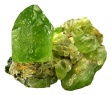
Peridot has been used as a Power Stone for centuries. Peridot fosters emotio... Read more