Panpsychism Bombshell: Why the Universe Has a Soul
- Details
- Higher Consciousness
- Category: Awakening
- Written by Ashton Rhodes
- Views: 11631

By Ashton Rhodes
Exclusive to CrystalWind News Service
Why Everything Has a Soul – Enter the Living Metaphysical Realm
What if consciousness lurks not just in brains, but everywhere? Panpsychism—the ancient idea that all matter possesses some form of soul or awareness—is no longer just a quirky footnote in philosophy.
In 2025, scientists and philosophers are giving it a fresh look, shaking up established views about mind, matter, and the very nature of reality.
Throughout history, our understanding of consciousness has been built largely on the assumption that awareness emerges from complex biological processes, particularly within human and animal brains. Yet panpsychism dares to challenge this view, suggesting that consciousness is not a rare accident but an intrinsic feature of the universe. With advances in neuroscience exposing the deep mysteries of subjective experience, and with contemporary physics increasingly bewildering our understanding of "matter," the panpsychist perspective is being re-examined by both hard scientists and speculative thinkers. This new wave of interest is not merely academic; it could have profound implications for how we relate to the world around us and even to ourselves.
The Meaning of Panpsychism
Panpsychism literally means “mind everywhere.” In short, it is the idea that the mind or soul isn’t unique to humans or animals, but is a fundamental quality of the universe. Imagine if grains of sand, quarks, and even clouds had the tiniest glimmer of awareness—very different from us, but still “something it’s like” to be a rock or a photon. This radical theory bridges a gap that standard materialist science struggles to explain: how subjective experience exists at all.
Within the philosophical landscape, panpsychism takes the position that consciousness cannot simply emerge from non-conscious matter, no matter how complex. Instead, even the most elemental components of nature must inherently possess some “mental aspect.” For proponents, this shifts the "hard problem" of consciousness away from being an inexplicable leap and instead sees it as an intricate layering of simple forms of experience into more complex minds, like ours. This approach doesn't require you to believe that atoms "think" as we do, but rather that they have some basic, primitive form of experience, forming a vast spectrum from the simple to the rich tapestry of human awareness.
History: From Ancient Greece to 21st-Century Lab
The roots of panpsychism run deep. Plato, Bruno, and Spinoza all suggested that the world might be animated by a spirit or mind. During the scientific revolution, materialism pushed this view aside—natural phenomena were explained without invoking a universal soul. But the question never fully vanished: if consciousness seemed to emerge mysteriously from unconscious matter, maybe there was more to the story.
Panpsychism has appeared in various cultures and philosophies over millennia. In ancient Greece, the idea was not only present in classical philosophy but also informed religious and spiritual traditions. Renaissance thinkers, like Giordano Bruno, faced censure for teaching that the universe itself was alive. Even in the Enlightenment and post-Enlightenment eras, thinkers such as Gustav Fechner, William James, and Alfred North Whitehead envisioned an ensouled cosmos. As neuroscience and evolutionary biology advanced, panpsychism retreated to the academic background. Yet, with present-day scientific debates intensifying around consciousness, panpsychism’s historical lineage is being reclaimed as both legacy and inspiration for today’s theorists.
The Modern Comeback: Why Panpsychism Won’t Die
Today, the central scientific mystery is consciousness itself. Neuroscience maps what the brain does, but why does brain activity actually feel like something from the inside? The famous “hard problem of consciousness”—why experience arises at all—remains unsolved. Panpsychism proposes a bold solution: consciousness doesn’t emerge; it’s everywhere. Recent papers and conferences show growing interest, with some neuroscientists and physicists proposing new metaphysical frameworks in which mind is as basic as matter.
With mounting frustrations over the inability of purely materialist or physicalist models to account for inner experience, some researchers are willing to entertain radical alternatives. Increasingly, conferences, symposia, and even mainstream publications are giving credence to theories that treat consciousness as woven into the fabric of reality itself. Some of the world’s leading theorists admit that, in the absence of a working model for the emergence of experience, panpsychism is logically coherent—even if it challenges common sense. The growing field of consciousness studies reflects this shift, where panpsychism has become a hotly discussed, if controversial, idea reclaiming attention.
Cosmic Souls: The Rise of Cosmopsychism
Some modern philosophers go further. Cosmopsychism is a new twist: the entire universe isn’t just filled with countless tiny minds—it is itself a single, vast, unified field of awareness. This is not mere poetry. A “living universe” model could resolve mind-matter paradoxes and unite the weirdness of quantum physics with the strangeness of subjective experience. Suddenly, the question of whether everything has a soul doesn’t sound so outlandish.
Cosmopsychism goes beyond distributed consciousness to propose that reality is ultimately saturated with a singular, cosmic mind. According to this framework, the universe as a whole is conscious, and what we experience as individual minds are unique but inseparable aspects of this “world soul.” In theoretical physics and eastern philosophy alike, similar ideas have surfaced, suggesting that individuality is an illusion and the deeper unity of consciousness is the real “substance” of existence. Research into quantum entanglement, nonlocality, and the apparent observer-dependent nature of reality lends a renewed plausibility to these ancient yet daring ideas.
Arguments For and Against
Supporters of panpsychism say it’s the only theory bold enough to make sense of consciousness. If mind is present everywhere, even in the tiniest bits of matter, maybe our awareness is just one end of a universal spectrum.
Defenders argue that, unlike materialist or dualist views, panpsychism does not face the “explanatory gap” between physics and experience. Instead of producing mind out of mindlessness, it starts with the assumption that mind-like qualities are Everywhere, and complexity gives rise to richer forms of awareness. This logic appeals to those who believe the intuitions of consciousness are as real and irreducible as space, time, or matter itself. Its supporters point to scientific mysteries—such as quantum indeterminacy and the observer effect—suggesting that reality may be more “mental” than traditional models admit.
Critics, though, fire back: if everything is “conscious,” what does that even mean for a photon or a pebble? Without testable predictions, isn’t this just metaphysical storytelling? And yet, as science increasingly runs up against the mysterious boundary where matter ends and mind begins, panpsychism refuses to die.
Skeptics highlight the lack of empirical evidence for awareness in simple entities and worry about the risk of “diluting” the concept of consciousness to meaninglessness. For many, the idea that subatomic particles have even proto-experience feels absurd. Critics also point out that panpsychism offers few, if any, falsifiable predictions, blurring the line between science and philosophy. And yet, as current scientific models continue to fall short of solving consciousness, the resilience—and perhaps necessity—of panpsychism in current debates becomes more pronounced.
Why This Matters Now
It’s not just an academic puzzle. In an age of ecological crisis and planetary uncertainty, panpsychism offers a new way to see ourselves: embedded in and connected to a living cosmos. Some environmentalists hope that if people started seeing rivers, animals, and even landscapes as having their own kind of “soul,” it could spark a revolution in ethics and conservation.
Panpsychism can foster a spiritual or ethical transformation in how we understand and treat the non-human world. The concept that nature itself is alive in some intrinsic sense challenges the dominance of human-centric thinking and underpins philosophies of deep ecology and environmental stewardship. By seeing the world not as a collection of dead resources, but as a vast community of beings with intrinsic value, panpsychism could inspire major shifts in public policy, conservation, and even global climate action. For many, this idea holds out hope for healing the longstanding division between humans and nature.
Conclusion: A Living Metaphysical Realm?
Whether true or not, panpsychism asks us to rethink our place in the universe—and the story isn’t over. In 2025, with neuroscience still chasing the secret of subjective experience and quantum physics hinting at deeper mysteries, the idea that the universe is alive seems less like wishful thinking and more like a daring hypothesis. Science and philosophy may finally be catching up to what some poets and mystics always believed: everything is alive, in its own way.
The debate over panpsychism isn’t just a matter of exotic speculation—it’s central to the modern search for meaning in a rapidly transforming world. If the universe truly has a soul, humanity’s relationship to the cosmos, to life and even to death, must be reinterpreted. Regardless of where the evidence will ultimately point, panpsychism remains one of the most profound—and potentially world-changing—ideas confronting us today. The living metaphysical realm may yet be the next great frontier for science and philosophy.
Call to Action
Are you intrigued by the possibility that the universe itself is conscious? Follow our blog for the latest on this fascinating debate, share your own thoughts below, and join the global search for answers to the biggest mystery of all.
Help shape the ongoing story—subscribe for updates, engage with other readers, and let us know your own theories or questions about the consciousness of reality. Whether skeptic or believer, your input enriches a conversation that is as old as humanity itself and as new as the next scientific breakthrough.
Disclaimer
This article is for educational discussions only. It does not constitute scientific or philosophical advice, nor does it represent the opinion of any official academic body. Always review primary research and consult expert sources where necessary.
The views expressed are merely one side of a fascinating intellectual debate and should not be taken as settled fact. Always look to peer-reviewed research or leading scholars in the field before making life, health, or policy decisions.
References
- Earth.com (Panpsychism: Everything with Consciousness)
- Stanford Encyclopedia of Philosophy (Panpsychism)
- MindMatters.ai (Materialism to Panpsychism)
- Microdose Substack (Psychedelics & Panpsychism)
- Wikipedia (Christof Koch on Panpsychism)
- International Journal of Jungian Studies (Cosmopsychism)
- Medium (Physics and Critiques of Panpsychism)
- ScienceDirect (Neuroscience on Panpsychism)
- Freya Mathews (Living Cosmos Panpsychism)
Ashton Rhodes is a metaphysics writer with a background in philosophy of mind and cognitive science. He has written for several science outlets, always testing the line between radical theory and grounded evidence. When he isn’t writing, you’ll find him hiking and wondering if the trees watch him, too.
© 2025. All original wisdom belongs to its creator. CrystalWind.ca honors this truth by adding design, formatting, and imagery to uplift your experience. Please respect the creator’s rights—redistribution or commercial use is not permitted without permission.

Enjoyed this article? Continue your journey with AromaWorx – wellness & aromatherapy , and support us at Support Crystal Wind™ .
Share your thoughts below! 
Recommended Tools & Resources
As an Amazon Associate we earn from qualifying purchases.


Keep CrystalWind.ca free—your gift matters now!
Help us spread light today. Thank you, supporters!

Support CrystalWind
Free spiritual inspiration since 2008
Help keep CrystalWind free and growing with a small contribution.
Buy us a coffee
Donate with PayPal


Latest Articles


✨ Digital Treasures ✨
The Crystal Wind Oracle
58-card deck • Lisa Iris art • ⭐⭐⭐⭐⭐
58-card deck • Lisa Iris art • ⭐⭐⭐⭐⭐
Crystal Lover's Handbook
67 crystals A–Z • chakras • healing uses
67 crystals A–Z • chakras • healing uses
Alchemy of Consciousness
Shift your reality from the inside out
Shift your reality from the inside out
Messages from the Archangels
Channeled guidance for your path
Channeled guidance for your path
Starseed Field Guide
Your mission • your origins • your tribe
Your mission • your origins • your tribe
Crystal & Mineral Wallchart
50+ stones • quick-reference • printable
50+ stones • quick-reference • printable
Complete Zodiac Collection
12 Lisa Iris prints • frame it • gift it
12 Lisa Iris prints • frame it • gift it
Zazzle Shop
Prints • posters • puzzles • gifts
Prints • posters • puzzles • gifts
Support CrystalWind.ca
Keep the light on • you have our gratitude
Keep the light on • you have our gratitude
✦ CRYSTAL WIND™ NETWORK ✦
- ✦ AscensionPulse.com — Ascension News
- ✦ LisaIris.com — Visionary Art
- ✦ ReikiWorks.ca — Energy Healing
- ✦ AromaWorX.ca — Aromatherapy
- ✦ Universal.net — Connecting the World
- ✦ NoBody.com — Be a Nobody

The Physical Card Deck
Dive into the Mystical World of the Crystal Wind Oracle Deck! Get All the Enchanting Details Now!
Grab Your Deck Now!NEW Expanded Boxed Edition!
Now with 58 Cards for Richer Wisdom!
The Mobile App
Shatter Illusions - Gain Clarity Now!
Instant Access On:
New! 53-Card Deck for Deeper Wisdom
See What Users Are Raving About!



Quake Watch
Featured Articles: Awakening
-
Do you see 11:11? Open or Close
11:11 Do you see it?
For many years the numbers 11:11 have been mysteriously appearing to millions of people all over the world.
Read More- The Meaning of 11:11 Open or Close
11:11. We see this all the time, twice a day on every clock, and feel there is some deeper meaning there. Is this a message? What does this mean? Why do I see 11:11 all the time? What is this telling me? What can I do with this energy?
Read More- The Four Agreements Open or Close
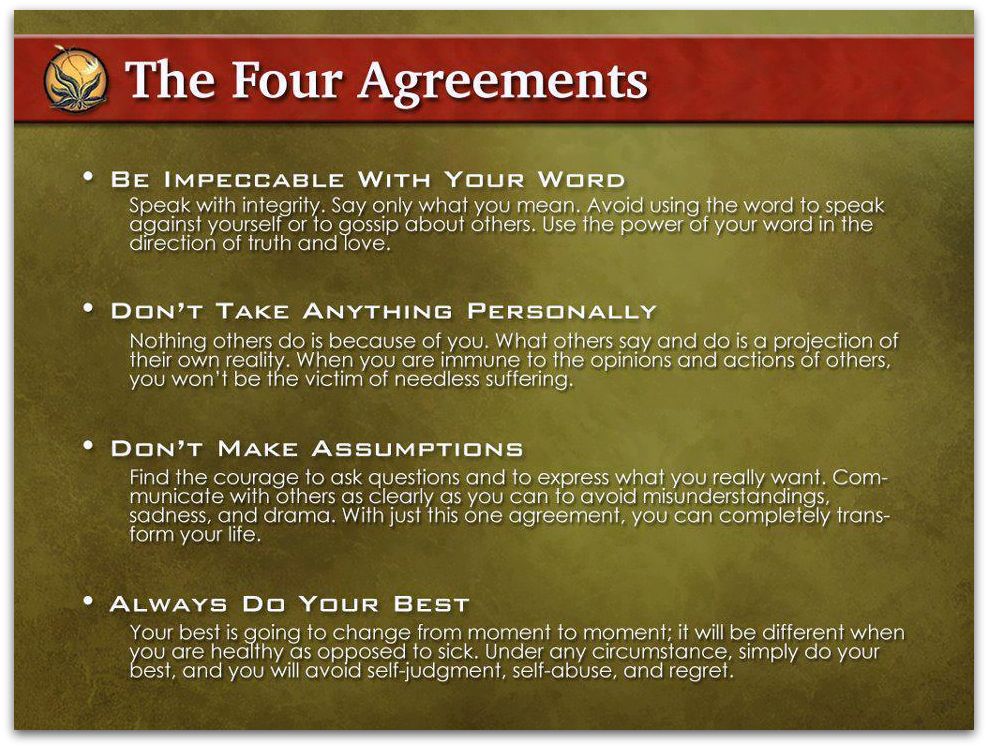
"The Four Agreements" offers a profound guide to personal freedom and transformation, rooted in ancient Toltec wisdom. By breaking free from self-limiting beliefs and embracing a powerful new code of conduct, they provide practical steps for achieving true happiness, love, and inner peace.
Read More - The Meaning of 11:11 Open or Close
Thank You for Visiting CrystalWind!
We’re honored to be part of your journey.
Let’s grow together!
If this space has been meaningful, support it here.
Featured This Month
Page:
Birth Totem - Bear

“Discover why Bear totem brings deep wisdom” ~Crystal Wind Read Time: 6 min |... Read more

Sun in Virgo

“Discover how order becomes living grace” ~Crystal Wind This long-form Virgo ... Read more
Sweet Violet
“Discover how violets awaken faithful heart powers” ~Crystal Wind These quiet... Read more
Harvest Moon

“Discover how these totems foster balance” ~Crystal Wind Standing at the thre... Read more
Peridot: The Healer's Stone
Peridot has been used as a Power Stone for centuries. Peridot fosters emotio... Read more
The Vine: September 2nd - September 29th
“Discover how swan grace steadies restless hearts” ~Crystal Wind As the wheel... Read more
Virgo Mythology
“Discover why Virgo embodies pure self-sufficiency” ~Crystal Wind The ancient... Read more
Crystals for Virgo
As the warmth of summer begins to soften into the crispness of autumn, the Sun... Read more
Watermelon Tourmaline
“Discover how rare crystals heal the heart” ~Crystal Wind This rare variety o... Read more
Mabon Magic: Ideas For Fall Decoration And R…
Welcome to the season of Fall! As we turn the Great Wheel toward autumn in t... Read more
Mabon in Modern Times: Fresh Takes on the Au…

The Mabon season begins somewhere around the 21st-22nd of September and cont... Read more
Virgo's Featured Stone - Sugilite
“Discover how sugilite builds lasting confidence” ~Crystal Wind In the realm ... Read more