You are here: Home  Pathfinder Inspired Paths Inspired Mind The Creative Power of Your Thoughts and How They Shape Reality
Pathfinder Inspired Paths Inspired Mind The Creative Power of Your Thoughts and How They Shape RealityWhy Psychological Barriers Crumble After the First Win
- Details
- Written by David R. Hamilton PhD
- Views: 15244

“Discover how first wins dissolve mental walls” ~Crystal Wind
When one person proves the impossible is merely untested, the rest of us gain permission to try. This piece explores how a single breakthrough rewires what we quietly assume is off-limits—and how that same shift can open doors in our own lives. Sometimes the wall was never structural; it was only the story we kept repeating.
Read Time: 6 min | Exclusive Publication | Crystal Wind News Service |
This week’s Better You, Backed by Science is about limits.
On 6 May 1954, Roger Bannister did something no human being had ever officially done before.
He ran a mile in under four minutes.
His time was 3 minutes, 59.4 seconds.
For years, the four-minute mile had acquired an almost mythical status. The world record had stood at 4:01.4 since 1945, and although several elite runners were getting tantalisingly close, nobody had managed to cross that line.
Bannister believed it could be done.
As a medical student with a keen interest in physiology, he couldn’t see any biological reason why someone capable of running 4:01.4 should suddenly encounter an absolute human limit just 1.5 seconds faster.
So he trained for it.
He used carefully planned interval training. He worked meticulously on pacing. He visualised the whole race repetitively, including breaking through the physical pain barrier. And on that famous afternoon in Oxford, helped by Chris Brasher and Chris Chataway setting the pace, he finally crossed the line in 3:59.4.
What is the Bannister Effect?
Then something interesting happened.
The previous record of 4:01.4 had stood for almost a decade. Yet just 46 days after Bannister’s run, Australian John Landy ran even faster: 3:57.9.
The four-minute barrier had been broken again.
And again, and again. It wasn’t long before two runners achieved it in the same race. Ten years later, a high-school student did it.
Today, the four-minute mile remains an extraordinary athletic achievement — but we no longer think of it as being close to the absolute limit of human capability.
In fact, on 18 July 2026, British athlete Josh Kerr ran a staggering 3:42.66 in London… breaking a world record that had stood for the previous 27 years.
That’s almost 17 seconds faster than Bannister.
So what is the Bannister Effect? It’s the psychological phenomenon where breaking through a seemingly impossible barrier makes it easier for other people to do the same.
The Limit on Top of the Limit
Bannister believed that the four minute mile was as much a psychological barrier as a physical one. He worked to break through both.
And that was important.
Because sometimes in life, we encounter a genuine difficulty — and then unconsciously place a second limit on top of it.
“I couldn’t do it last time” becomes “I can’t do it.”
“I’ve never earned that much” becomes “I’m not capable of earning that much.”
“That relationship didn’t work” becomes “Relationships don’t work for me.”
“I’ve never been good at this” becomes “I’m just not that kind of person.”
The first statement describes an experience.
The second turns the experience into a limit.
Your Brain and Limits
There’s an interesting parallel in exercise science.
Sports scientist Tim Noakes proposed what’s known as the Central Governor Model.
Rather than fatigue simply being the moment when muscles physically can’t do any more, Noakes suggested that the brain plays an important role in regulating effort, generating sensations of fatigue partly to protect the body’s internal stability.
Essentially, the brain creates the feeling of tiredness and pain to protect you – from injury… or worse.
The physical tiredness is real, but it is generated by the brain as it tries to protect you.
The model remains debated, and we now know that fatigue involves a complex combination of processes in the brain and body.
But it raises a fascinating idea:
Feeling as though you’ve reached your limit isn’t always the same thing as actually having reached it.
There’s a lot of wiggle room, and some of that is in the mind.
Something similar can happen psychologically.
When you try to do something new or stretch yourself – whether changing career, earning more money, or deepening a relationship, for instance – the brain treats it as a risk.
So it floods your mind with self-doubt, anxiety, procrastination, fear of rejection, and other psychological tactics to stop you from taking that risk. It’s trying to protect you, after all.
It treats a threat to your emotional stability (from, say, moving from safety in the direction of a goal) in a similar way to how it treats a physical threat to your heart or muscles.
It’s constantly making predictions about what is risky, what is safe, and what is likely to happen next.
Sometimes those predictions are enormously useful and do prevent you from pushing yourself too hard or too far, or from making a huge mistake in life.
But sometimes they’re based on old information. Like:
A previous failure.
A rejection.
Something somebody once told you.
A frightening experience.
Or simply the fact that you’ve never done something before.
Then gradually:
“I’ve never done this” or “I’ve never managed to do this” becomes “I can’t do this.”
That’s where Roger Bannister gives us a useful lesson.
Not that there are no limits.
But that it’s worth checking whether the limit you’re experiencing is entirely real — or whether you’ve unknowingly added a psychological one on top.
Try This: Find your own 4-minute mile
- Think of something you’ve quietly decided isn’t possible for you.
- It might concern your career, a relationship, education, money, fitness, creativity or something entirely different.
- Write down the belief.
- Then ask: Is this actually a fact — or is it a prediction?
- Instead of: I can’t do this. try: I haven’t found a way to do this yet.
- Instead of attempting one enormous leap, create a small experiment that moves you slightly beyond your usual boundary.
- Keep track of tiny successes. Treat setbacks as information rather than verdicts.
- And perhaps most importantly: Find your Bannister.
- Find someone who has already done something similar to what you want to do.
- Read about them. Listen to them. Study how they did it.
- Because sometimes seeing another person cross a line changes what we imagine is possible for ourselves.
You don’t have to believe that anything is possible.
But perhaps more is possible than you currently believe.
And sometimes discovering that begins with one simple question:
What if that isn’t really my limit?
"Feeling as though you’ve reached your limit isn’t always the same thing as actually having reached it."
What if that isn’t really my limit?
Author
David R. Hamilton PhD After completing his PhD, David worked for 4 years in the pharmaceutical industry developing drugs for cardiovascular disease and cancer. During this time he also served as an athletics coach and manager of one of the UK’s largest athletics clubs, leading them to three successive UK finals. Upon leaving the pharmaceutical industry, David co-founded the international relief charity Spirit Aid Foundation and served as a director for 2 years.
Disclaimer: The information in this article is presented for educational and informational purposes only. Views expressed are those of the contributing author and do not necessarily reflect the views of CrystalWind.ca, which makes no claims regarding the accuracy of any content herein.
Explore More
Primary: #BannisterEffect web #PsychologicalBarriers web #MentalLimits web
Related: #CentralGovernor web
Primary: #BannisterEffect web #PsychologicalBarriers web #MentalLimits web
Related: #CentralGovernor web
© 2026 CrystalWind.ca | All Rights Reserved | Awakening Souls Since 2008
Support: Ko-Fi | PayPal
#CrystalWind #SpiritualJourney #Awakening

Enjoyed this article? Continue your journey with AromaWorx – wellness & aromatherapy , and support us at Support Crystal Wind™ .
Share your thoughts below! 















































Support CrystalWind
Free spiritual inspiration since 2008
Help keep CrystalWind free and growing with a small contribution.
Buy us a coffee
Donate with PayPal


Latest Articles


✨ Digital Treasures ✨
The Crystal Wind Oracle
58-card deck • Lisa Iris art • ⭐⭐⭐⭐⭐
58-card deck • Lisa Iris art • ⭐⭐⭐⭐⭐
Crystal Lover's Handbook
67 crystals A–Z • chakras • healing uses
67 crystals A–Z • chakras • healing uses
Alchemy of Consciousness
Shift your reality from the inside out
Shift your reality from the inside out
Messages from the Archangels
Channeled guidance for your path
Channeled guidance for your path
Starseed Field Guide
Your mission • your origins • your tribe
Your mission • your origins • your tribe
Crystal & Mineral Wallchart
50+ stones • quick-reference • printable
50+ stones • quick-reference • printable
Complete Zodiac Collection
12 Lisa Iris prints • frame it • gift it
12 Lisa Iris prints • frame it • gift it
Zazzle Shop
Prints • posters • puzzles • gifts
Prints • posters • puzzles • gifts
Support CrystalWind.ca
Keep the light on • you have our gratitude
Keep the light on • you have our gratitude
✦ CRYSTAL WIND™ NETWORK ✦
- ✦ AscensionPulse.com — Ascension News
- ✦ LisaIris.com — Visionary Art
- ✦ ReikiWorks.ca — Energy Healing
- ✦ AromaWorX.ca — Aromatherapy
- ✦ Universal.net — Connecting the World
- ✦ NoBody.com — Be a Nobody

The Physical Card Deck
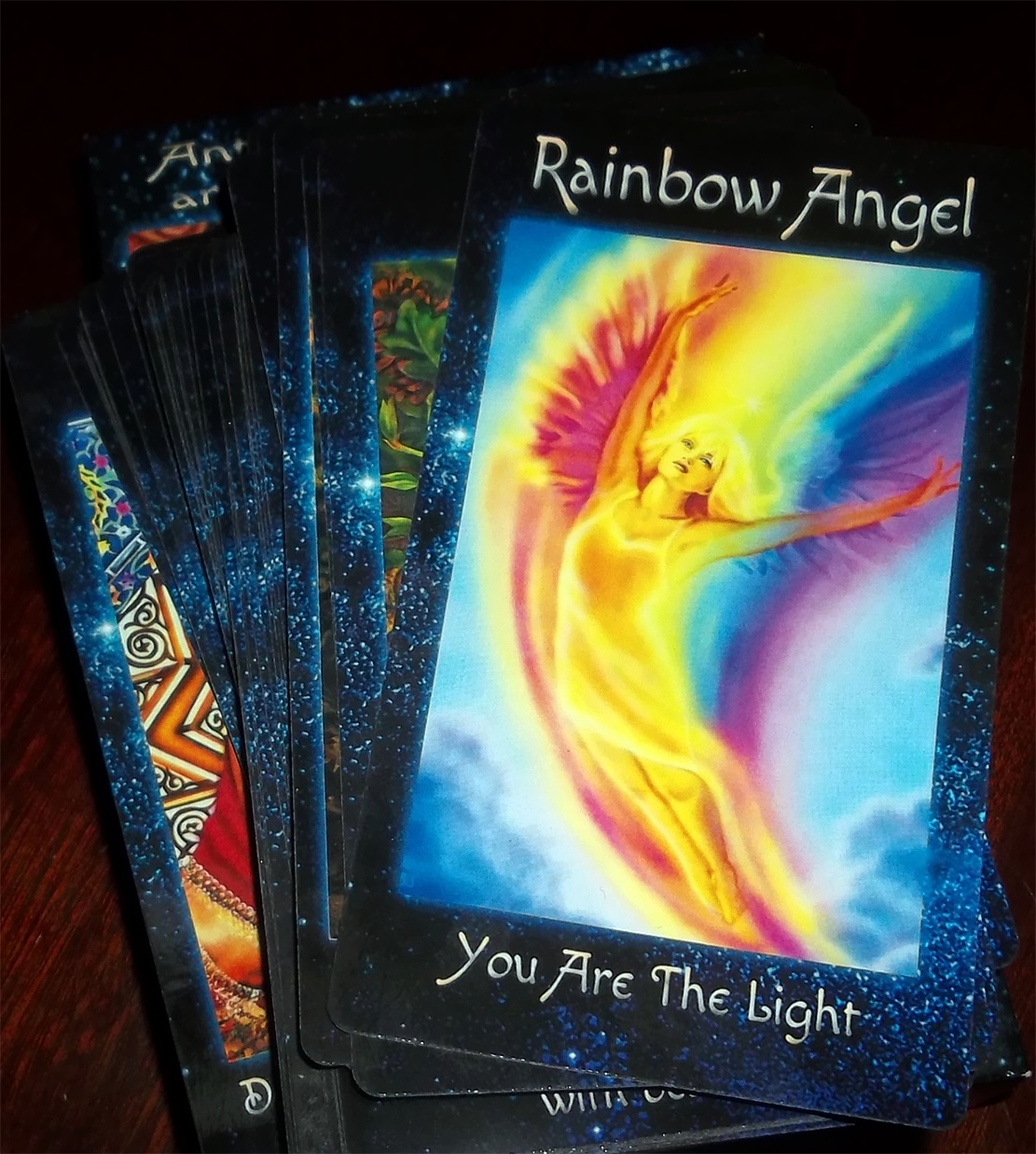
Dive into the Mystical World of the Crystal Wind Oracle Deck! Get All the Enchanting Details Now!
Grab Your Deck Now!NEW Expanded Boxed Edition!
Now with 58 Cards for Richer Wisdom!
The Mobile App
Shatter Illusions - Gain Clarity Now!
Instant Access On:
New! 53-Card Deck for Deeper Wisdom
See What Users Are Raving About!



Thank You for Visiting CrystalWind!
We’re honored to be part of your journey.
Let’s grow together!
If this space has been meaningful, support it here.
Featured This Month
Page:
Watermelon Tourmaline

“Discover how rare crystals heal the heart” ~Crystal Wind This rare variety o... Read more
Birth Totem - Bear

“Discover why Bear totem brings deep wisdom” ~Crystal Wind Read Time: 6 min |... Read more
Harvest Moon

“Discover how these totems foster balance” ~Crystal Wind Standing at the thre... Read more
Mabon Magic: Ideas For Fall Decoration And R…

Welcome to the season of Fall! As we turn the Great Wheel toward autumn in t... Read more
Peridot: The Healer's Stone

Peridot has been used as a Power Stone for centuries. Peridot fosters emotio... Read more
Crystals for Virgo

As the warmth of summer begins to soften into the crispness of autumn, the Sun... Read more
Virgo's Featured Stone - Sugilite
“Discover how sugilite builds lasting confidence” ~Crystal Wind In the realm ... Read more
Mabon in Modern Times: Fresh Takes on the Au…

The Mabon season begins somewhere around the 21st-22nd of September and cont... Read more

Sun in Virgo

“Discover how order becomes living grace” ~Crystal Wind This long-form Virgo ... Read more

Sweet Violet

“Discover how violets awaken faithful heart powers” ~Crystal Wind These quiet... Read more
Virgo Mythology
“Discover why Virgo embodies pure self-sufficiency” ~Crystal Wind The ancient... Read more
The Vine: September 2nd - September 29th

“Discover how swan grace steadies restless hearts” ~Crystal Wind As the wheel... Read more