
Autistic or Empath? 10 Shocking Overlaps Revealed!
- Details
- Written by Diane Katherine
- Views: 20757

Introduction
There’s a growing conversation online about the similarities between people on the autism spectrum and those who identify as Empaths.
Both groups are often described as highly sensitive to their environments, deeply perceptive of others’ emotions, and prone to overwhelm in social situations.
Articles describing autistic perception, such as noticing tiny inconsistencies, emotional “vibes,” or unspoken social cues, can sound remarkably similar to descriptions of what it feels like to be an Empath.
Yet, while the overlap is striking, the underlying mechanisms are quite different.
Understanding these similarities and differences not only helps avoid misconceptions but also highlights how both neurodivergence and Empath sensitivity can be extraordinary ways of experiencing the world.
So, let’s take a look at where the traits of an Empath may overlap with autism:
1. The Core of Perception: Neurology vs. Emotional Resonance
It is known, the autistic brain processes sensory and social information differently, often with heightened attention to detail, patterns, and incongruities. What others filter out as background noise, an autistic person’s brain takes in as equally important data. A flicker of facial tension, a hum from a light fixture, a slightly rearranged desk, all register because their filtering systems function differently.
An Empath’s perception, on the other hand, could be deemed as affective rather than neurological. Empaths feel others’ emotions as though they were their own, often to the point of emotional contagion. Rather than noticing a pattern of inconsistencies in tone or behaviour through logical detail, Empaths tend to absorb the emotional energy of a space instinctively. They feel when someone is sad, angry, or anxious, sometimes before words are spoken.
Where the autistic person might see that someone’s “I’m fine” doesn’t align with their body language, the Empath might feel the sadness or tension radiating from that same person. Both notice the mismatch, but one does so through cognitive pattern recognition, the other through emotional resonance.
2. Hyper-Awareness and Overstimulation
Both autistic individuals and Empaths experience the world with heightened awareness, and both can become overwhelmed by it.
For the autistic brain, overstimulation often arises from sensory overload. The hum of electronics, fluorescent lights, multiple conversations, and unpredictable social expectations can all bombard the senses simultaneously. It’s not necessarily the emotional tone that’s overwhelming, but the sheer quantity of sensory input with no effective “filter” to manage it.
Empaths, conversely, are overwhelmed by emotional overload. Crowded spaces or tense environments can feel suffocating because they absorb not just sensory information but emotional energy. An Empath in a hospital, for instance, might feel anxious or drained not from sound or light but from the collective emotional pain around them.
Both experiences can lead to exhaustion, withdrawal, and the need for solitude. The difference lies in what causes the overwhelm, sensory versus emotional, though they often coexist.
3. Reading People: Analytical Observation vs. Emotional Intuition
Autistic individuals notice when people’s tone doesn’t match their words, when actions contradict stated values, or when social power dynamics shift. These abilities stem from pattern recognition and a strong drive for logical consistency. Many autistic people are acutely aware of irregularities, when someone says one thing but behaves another way, because their minds naturally look for predictability and order.
Empaths also detect such inconsistencies, but through a different process. Rather than analysing data points, they “feel” the emotional truth beneath the words. If someone says they’re happy but radiates sadness, an Empath doesn’t consciously track tone or eye contact; they simply feel a heaviness that isn’t their own.
Both can be incredibly attuned to authenticity, but one perceives it cognitively and sensorily, while the other perceives it emotionally and energetically.
4. Authenticity and Masking
Another fascinating overlap is the shared emphasis on authenticity, and the mutual struggle with masking.
In autism, masking refers to the conscious or unconscious effort to imitate social behaviours to fit in, maintaining eye contact, modulating voice tone, mirroring expressions, or suppressing stimming (self-stimulating behaviour). This often results in deep exhaustion because it requires constant self-monitoring and suppression of natural instincts.
Empaths also “mask,” though for different reasons. They may hide their sensitivity to protect themselves from emotional overwhelm or from being labelled as “too sensitive.” They might downplay their intuition or avoid expressing when they’ve absorbed another’s pain, fearing judgment or disbelief.
Both understand what it means to hide one’s authentic self to survive in social spaces that don’t always make room for their natural modes of being. And both often recognize when someone else is doing the same, that subtle, unspoken moment of mutual recognition.
5. Social Awareness and Power Dynamics
Autistic individuals often notice the rhythm of interactions, such as who interrupts, who’s being ignored, or who dominates. This comes from a natural attunement to social systems rather than emotional undercurrents. It’s a form of social pattern analysis.
Empaths, on the other hand, may sense the emotional power imbalance. They feel the discomfort or insecurity of the quieter person and the dominating energy of the louder one. Where the autistic person might see inequality in communication, the Empath might rather feel an injustice or tension.
Again, the difference lies in cognitive patterns versus emotional resonance, but the resulting insight can look strikingly similar.
6. Language, Silence, and What’s Unsaid
Autistic individuals are known to pick up on linguistic patterns, micro-expressions, and the weight of what isn’t said. They might notice contradictions in word choice, subtle pauses, or body language shifts that others miss. For them, these cues are information to decode for clarity and predictability.
Empaths, too, sense what’s unsaid, but more as a feeling than an observation. For example, a pained silence feels heavy and lingers in the air. They may not be able to articulate exactly what they’ve noticed, but they’ll know when something is off.
Both are exquisitely sensitive to suggestion; the difference lies in how the subtext is processed: intellectually or emotionally.
7. Emotional Exhaustion and Recovery
Another similarity, and perhaps the most poignant, is the need for recovery after social interaction. Both autistic individuals and Empaths may appear calm and composed externally while internally processing an immense amount of input.
For autistic people, this comes from managing sensory overload, decoding social cues, and maintaining composure in unpredictable interactions. Afterward, they may need hours or days of solitude to reset their nervous systems.
For Empaths, recovery means clearing emotional energy, disentangling their own feelings from those they’ve absorbed from others. They may also retreat into solitude, nature, or creative activity to restore equilibrium and reset their nervous systems.
Both experiences reflect a profound sensitivity to the social environment, though filtered in different ways.
8. Shared Misunderstandings
Because both groups notice things that others miss, they’re often misunderstood. Autistic individuals may be labelled as “dramatic” or “awkward,” while Empaths are often called “too sensitive” or “overly emotional.” In both cases, society tends to dismiss heightened perception rather than value it.
Yet these ways of being can be extraordinary strengths. Autistic individuals bring deep honesty, attention to detail, and a capacity to perceive structural truths others overlook. Empaths bring compassion, emotional understanding, and the ability to connect deeply. Both see, or feel, what’s hidden beneath the surface.
9. When the Two Overlap
It’s worth noting that being autistic and being an Empath are not mutually exclusive. Some autistic people describe themselves as deeply Empathic, though their Empathy may manifest differently, through cognitive Empathy (understanding how someone feels) rather than emotional Empathy (feeling it themselves).
Others experience both sensory and emotional hyper-awareness, blending traits that resemble both profiles.
This overlap can make social experiences even more intense, the combination of logical and emotional attunement can feel like living without filters in every direction.
10. Different Paths, Shared Humanity
While the Empath and the autistic person might describe similar experiences, noticing unspoken energy, needing recovery time, valuing authenticity, the roots of those experiences are distinct. Autism arises from a neurotype that processes information in a detailed and literal way. An Empath’s sensitivity arises from a deep affective resonance with others’ emotions.
Both, however, show us that human perception exists on an immense range. Some people navigate the world through analytical detail, others through emotional intuition, and some through both.
The Autistic Empath
Now after taking all the above into consideration, we should not overlook the fact that a person can be both an Empath and autistic.
An autistic Empath might experience sensitivity to both sensory input and emotional energy. For example, where a neurotypical person might only notice the brightness of a supermarket’s lights, an autistic Empath might feel overwhelmed by the fluorescent glare and by the anxious, rushed energy of the crowd around them. It isn’t simply “too loud” or “too emotional,” it’s an avalanche of sensory and emotional data coming in all at once, without the filters that most people take for granted.
Because autism often involves difficulty filtering sensory information (sounds, lights, textures, smells), and because an Empath absorbs emotional information (tension, sadness, excitement, stress), the combination can create a world that feels constantly “turned up to maximum volume.” Everyday settings, such as offices, classrooms, social events, or even family gatherings, can very quickly become overstimulating. The autistic Empath may pick up on every flickering light, every shift in tone, and every undercurrent of unspoken emotion all at once. (I should also point out that you can be a highly reactive Empath, where you are more attuned to noticing strong smells, bright lights, etc, without necessarily being autistic.)
And this is when self-care isn’t optional; it’s essential. Downtime after social interactions isn’t a luxury, but a necessary way to let the nervous system and emotional field reset. Many will find refuge in quiet environments, nature, creative pursuits, or time alone where sensory and emotional input is minimal.
Sadly, society often misunderstands this kind of sensitivity as weakness or overreaction, when in reality it’s the result of experiencing the world with a level of intensity most can’t imagine.
In short, being both autistic and an Empath means perceiving the world in vibrant detail, every sound, every emotion, every subtle change in energy. It can be overwhelming, yes, but it can also be extraordinary. With the right boundaries, tools, and understanding, that deep sensitivity can transform from a source of distress into a profound form of awareness and empathy that enriches both the individual and those around them.
So, there you go. If you have been pondering what makes someone autistic and someone an Empath, hopefully, this will give you some food for thought.
Until next time,
Diane.
Credit Diane Katherine
Diane lives in Manchester, UK. She spent the past twenty years researching everything from human anatomy to the law of attraction. She is a qualified colour and crystal therapist, massage therapist, reflexologist, aromatherapist, healing practitioner, yoga and meditation teacher, and has done in-depth research into diet and nutrition and how it affects Sensitive people.. ©Diane Kathrine
© 2025 CrystalWind.ca & Author | All Rights Reserved | No reproduction without permission | Awakening Souls Since 2008.
#CrystalWind #SpiritualJourney

Enjoyed this article? Continue your journey with AromaWorx – wellness & aromatherapy , and support us at Support Crystal Wind™ .
Share your thoughts below! 










































Support CrystalWind
Free spiritual inspiration since 2008
Help keep CrystalWind free and growing with a small contribution.
Buy us a coffee
Donate with PayPal


Latest Articles


✨ Digital Treasures ✨
The Crystal Wind Oracle
58-card deck • Lisa Iris art • ⭐⭐⭐⭐⭐
58-card deck • Lisa Iris art • ⭐⭐⭐⭐⭐
Crystal Lover's Handbook
67 crystals A–Z • chakras • healing uses
67 crystals A–Z • chakras • healing uses
Alchemy of Consciousness
Shift your reality from the inside out
Shift your reality from the inside out
Messages from the Archangels
Channeled guidance for your path
Channeled guidance for your path
Starseed Field Guide
Your mission • your origins • your tribe
Your mission • your origins • your tribe
Crystal & Mineral Wallchart
50+ stones • quick-reference • printable
50+ stones • quick-reference • printable
Complete Zodiac Collection
12 Lisa Iris prints • frame it • gift it
12 Lisa Iris prints • frame it • gift it
Zazzle Shop
Prints • posters • puzzles • gifts
Prints • posters • puzzles • gifts
Support CrystalWind.ca
Keep the light on • you have our gratitude
Keep the light on • you have our gratitude
✦ CRYSTAL WIND™ NETWORK ✦
- ✦ AscensionPulse.com — Ascension News
- ✦ LisaIris.com — Visionary Art
- ✦ ReikiWorks.ca — Energy Healing
- ✦ AromaWorX.ca — Aromatherapy
- ✦ Universal.net — Connecting the World
- ✦ NoBody.com — Be a Nobody

The Physical Card Deck
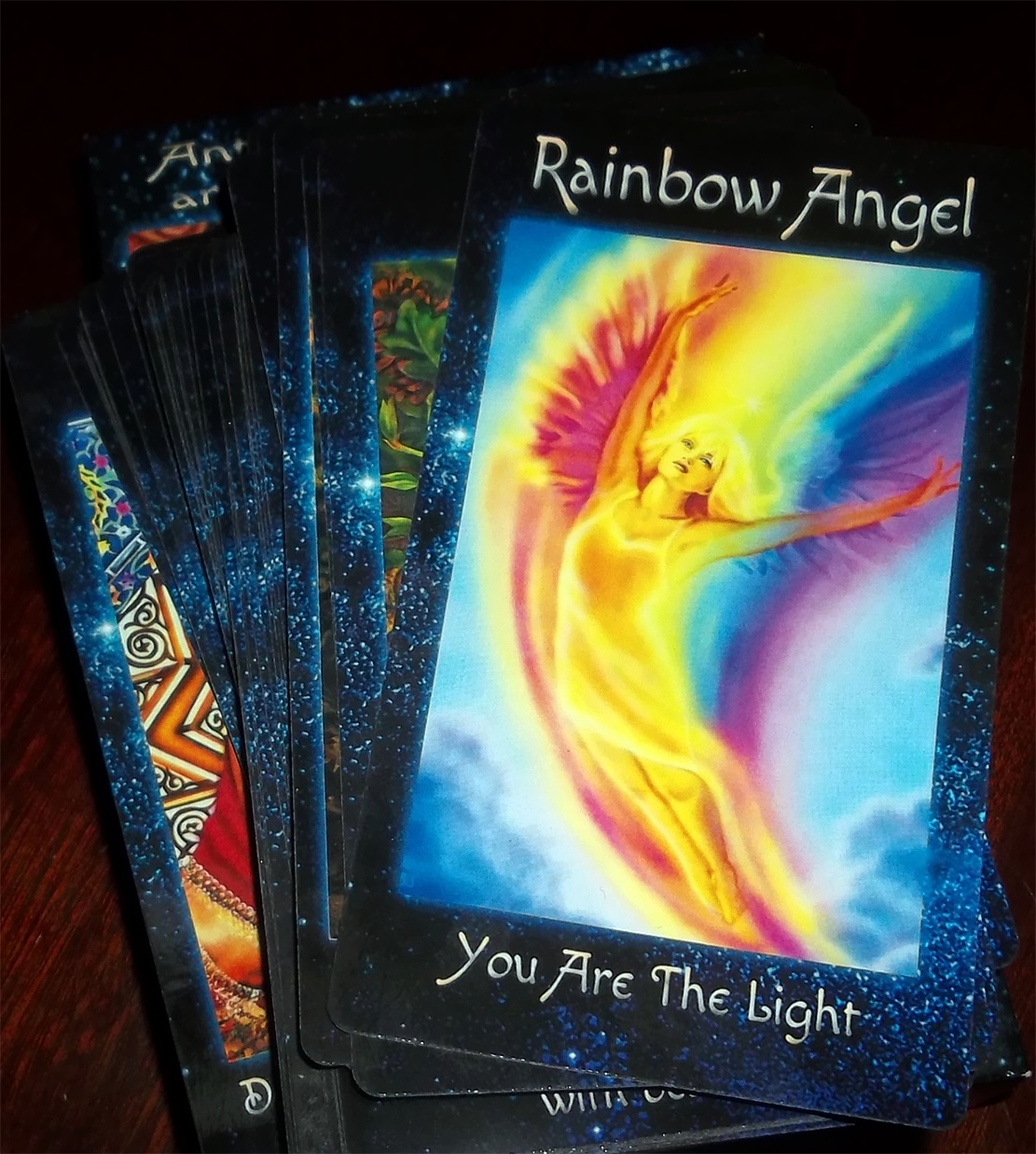
Dive into the Mystical World of the Crystal Wind Oracle Deck! Get All the Enchanting Details Now!
Grab Your Deck Now!NEW Expanded Boxed Edition!
Now with 58 Cards for Richer Wisdom!
The Mobile App
Shatter Illusions - Gain Clarity Now!
Instant Access On:
New! 53-Card Deck for Deeper Wisdom
See What Users Are Raving About!



Quake Watch
Thank You for Visiting CrystalWind!
We’re honored to be part of your journey.
Let’s grow together!
If this space has been meaningful, support it here.
Featured This Month
Page:
Virgo Mythology
“Discover why Virgo embodies pure self-sufficiency” ~Crystal Wind The ancient... Read more

Crystals for Virgo

As the warmth of summer begins to soften into the crispness of autumn, the Sun... Read more

Sweet Violet

“Discover how violets awaken faithful heart powers” ~Crystal Wind These quiet... Read more
The Vine: September 2nd - September 29th

“Discover how swan grace steadies restless hearts” ~Crystal Wind As the wheel... Read more
Birth Totem - Bear

“Discover why Bear totem brings deep wisdom” ~Crystal Wind Read Time: 6 min |... Read more
Peridot: The Healer's Stone

Peridot has been used as a Power Stone for centuries. Peridot fosters emotio... Read more
Sun in Virgo

“Discover how order becomes living grace” ~Crystal Wind This long-form Virgo ... Read more

Watermelon Tourmaline

“Discover how rare crystals heal the heart” ~Crystal Wind This rare variety o... Read more
Mabon in Modern Times: Fresh Takes on the Au…

The Mabon season begins somewhere around the 21st-22nd of September and cont... Read more
Harvest Moon

“Discover how these totems foster balance” ~Crystal Wind Standing at the thre... Read more
Mabon Magic: Ideas For Fall Decoration And R…

Welcome to the season of Fall! As we turn the Great Wheel toward autumn in t... Read more
Virgo's Featured Stone - Sugilite
“Discover how sugilite builds lasting confidence” ~Crystal Wind In the realm ... Read more