Telepathic Plants: The Secret Language of Nature?
- Details
- Written by CrystalWind.ca
- Views: 4665
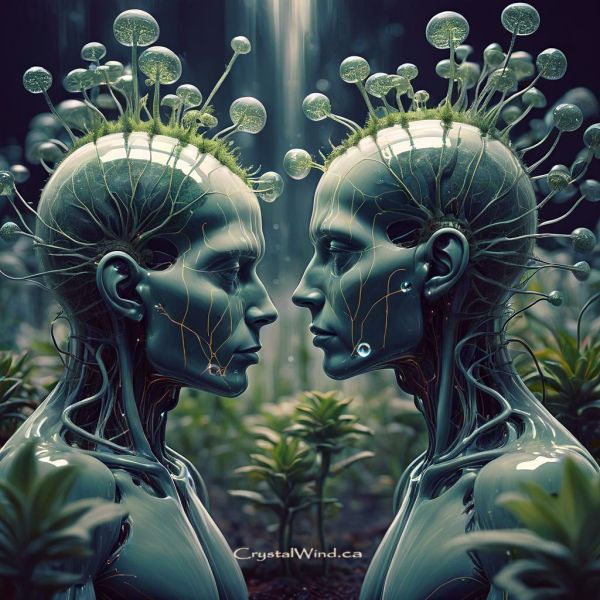
Do plants communicate by using telepathy?
This interesting question was raised by recent research published in the Australian journal “BMC Ecology” suggesting that plants seem to react to slight noises — generated inside the cell — to talk with each other. And what does this mean for humans?
Those who believe in parapsychological phenomena, like telepathy between humans, haven’t been able to provide utter proof that the unconscious or conscious sending and receiving of mental and emotional signals called telepathy is actually possible — but even if it is, we don’t have a hint of what mechanisms would explain it.
Senior Scientist at The Institute of Noetic Sciences, Dean Radin, has suggested that quantum mechanics will provide an explanation of how telepathy works. Maybe delving deeper into the way other organisms communicate will also help us sort out the mystery of telepathy among humans.
Plants communicate through sound waves
A recent study found evidence to support the idea that plants communicate with each other through sound waves.
After observing how plants affect each other’s growth, Monica Gagliano and Michael Renton from the University of Western Australia proposed that plants communicate through sound waves (inaudible for humans) or nanomechanical oscillations, which are precisely within the realm of quantum mechanics.
Nanomechanical oscillations are vibrations on the tiniest atomic or molecular scale.
The researchers noticed that chili seeds (Capsicum annuum) grew better in a locked container in the presence of basil (Ocimum basilicum) but were hindered by the presence of fennel (Foeniculum vulgare), suggesting that the growing environment had less effect on the development of the seeds than the way plants interacted with one another.
Gagliano and Renton said that “seed germination was positively enhanced by the presence of a ‘good’ neighbor, even when the known signaling modalities were blocked, indicating that light, touch or chemical signals may not be indispensible for different plant species to sense each other’s presence.”
Gagliano had already published findings last year of corn roots producing clicking sounds in the 220-Hertz range. The article appeared in “Trends in Plant Science.” She also found that, when suspended in water, corn roots tended to lean towards vibrations of the same frequency range.
Are we all interconnected?
Some studies suggest that plants communicate with each other through vibrations.
Quantum mechanics teaches us that Earth is a sea of vibrations. Humans and animals respond to different frequencies. Even bacteria can signal one another with vibrations.
In 2011, researchers Allan Widom and colleagues from Northeastern University in Boston published findings showing that single-celled bacteria like E-Coli might communicate with each other by using radio waves. They calculated that the transition frequencies between these energy levels correspond to radio signals broadcast at 0.5, 1 and 1.5 kilohertz, same frequencies as those used in AM and FM radio transmissions.
Researchers have also discovered that bacteria can communicate by using a chemical language called “quorum sensing,” which allows them to act as a synchronized group.
The idea that plants communicate is not totally novel. In 1973, explorer Lyall Watson published “Supernature: A Natural History of the Supernatural,” where he suggested that, plants responded sympathetically when a live shrimp was thrown into boiling water.
People have been talking to plants for ages. Native Americans’ herbal medicine, for example, is based on some form of communication with plants. Bach flower remedies are also based on the capacity of a healer to communicate with the flowers and ask them to render their healing properties.
Discovery Channel’s MythBusters Tory Belleci, Kari Byron and Scottie Chapmen studied the effect of either praise or cruel insults on separate greenhouses while using another greenhouse as experimental control for two months. To their own surprise, the silent greenhouse produced lower biomass and smaller pea pods than the other two. Kind words or insults didn’t seem to make a difference, which seems to prove that it is sound the plants respond to.
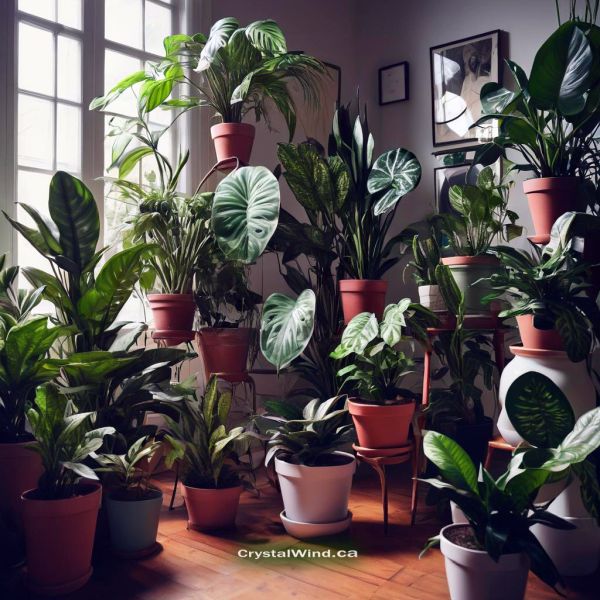
Communication among plants mediated by light, chemicals
Studies suggest that plants communicate.
Plants can also react to light, and some use allelopathy to communicate with each other.
First used in 1937 by Austrian professor Hans Molisch, the term allelopathy describes a biological mechanism by which one organism produces chemical substances that influence the growth, survival and reproduction of another organism. Chemicals released into the soil or air by roots or leaves may alert other trees that it’s been eaten so that the others can speed up their production of chemical defenses. Allelopathy is found not only among plants, but also among bacteria and fungi.
Bielefeld University Professor Dr. Olaf Kruse and his team published, last year, in “Nature Communications” that green algae can draw energy from photosynthesis and from other plants.
If this type of communication through light, chemicals or sound waves cannot be called telepathy, then maybe it will still ignite the imagination of those who believe that we’re all connected in pretty much the same fashion as the planetary brain depicted in the “Avatar” movie. In Pandora, the conquered moon, there is a vast neural network through which the humanoids Na’vi and other beings can connect. You might remember seeing the image of interconnected plant roots rapidly exchanging information.
In planet Earth, as we now know, entire forests are indeed interconnected by networks of underground fungi (Mycorrhizae). Would it sound too off to imagine that plants might be using acoustic signals to transmit information through this web?
Psychologist and energy healer Dr. Olivia Bader-Lee thinks that the result of these experiments with plants will also confirm that humans can share some form of energy.
“The human organism is very much like a plant,” she said. “It draws needed energy to feed emotional states, and this can essentially energize cells or cause increases in cortisol and catabolize cells depending on the emotional trigger.”
© 2013 - 2024 crystalwind.ca. All rights reserved. Hidden tracking code is embedded for monitoring purposes. We employ sniffer technology to track all IP addresses. Please note that using a Proxy/VPN/Tor will not conceal your IP address. The title for this article was created by CrystalWind.ca. If this article is duplicated from our website and/or our title is utilized, we will be alerted and will take necessary action.

Enjoyed this article? Continue your journey with AromaWorx – wellness & aromatherapy , and support us at Support Crystal Wind™ .
Share your thoughts below! 

























































Support CrystalWind
Free spiritual inspiration since 2008
Help keep CrystalWind free and growing with a small contribution.
Buy us a coffee
Donate with PayPal


Latest Articles


✨ Digital Treasures ✨
The Crystal Wind Oracle
58-card deck • Lisa Iris art • ⭐⭐⭐⭐⭐
58-card deck • Lisa Iris art • ⭐⭐⭐⭐⭐
Crystal Lover's Handbook
67 crystals A–Z • chakras • healing uses
67 crystals A–Z • chakras • healing uses
Alchemy of Consciousness
Shift your reality from the inside out
Shift your reality from the inside out
Messages from the Archangels
Channeled guidance for your path
Channeled guidance for your path
Starseed Field Guide
Your mission • your origins • your tribe
Your mission • your origins • your tribe
Crystal & Mineral Wallchart
50+ stones • quick-reference • printable
50+ stones • quick-reference • printable
Complete Zodiac Collection
12 Lisa Iris prints • frame it • gift it
12 Lisa Iris prints • frame it • gift it
Zazzle Shop
Prints • posters • puzzles • gifts
Prints • posters • puzzles • gifts
Support CrystalWind.ca
Keep the light on • you have our gratitude
Keep the light on • you have our gratitude
✦ CRYSTAL WIND™ NETWORK ✦
- ✦ AscensionPulse.com — Ascension News
- ✦ LisaIris.com — Visionary Art
- ✦ ReikiWorks.ca — Energy Healing
- ✦ AromaWorX.ca — Aromatherapy
- ✦ Universal.net — Connecting the World
- ✦ NoBody.com — Be a Nobody

The Physical Card Deck
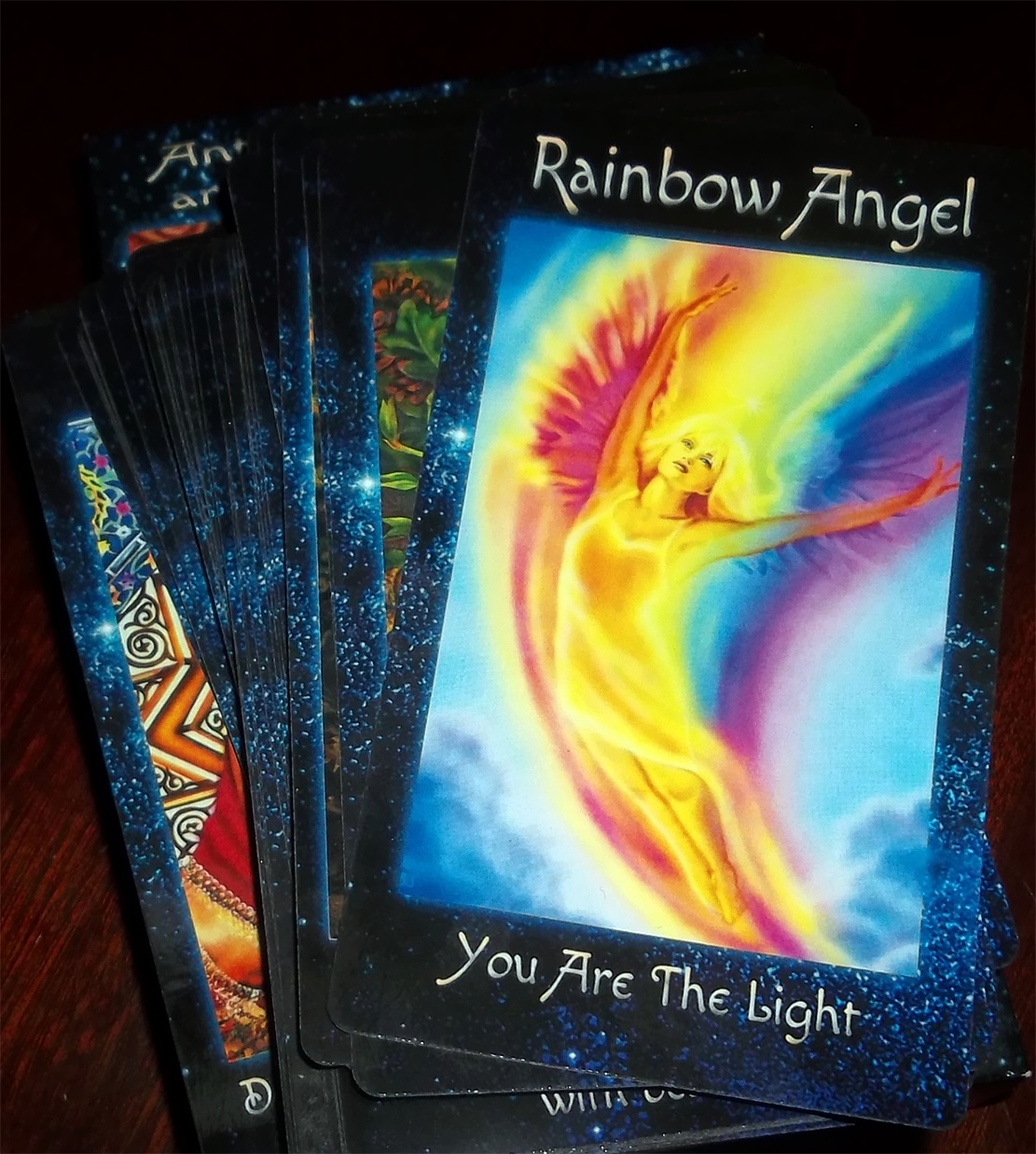
Dive into the Mystical World of the Crystal Wind Oracle Deck! Get All the Enchanting Details Now!
Grab Your Deck Now!NEW Expanded Boxed Edition!
Now with 58 Cards for Richer Wisdom!
The Mobile App

Shatter Illusions - Gain Clarity Now!
Instant Access On:
New! 53-Card Deck for Deeper Wisdom
See What Users Are Raving About!



Quake Watch
Thank You for Visiting CrystalWind!
We’re honored to be part of your journey.
Let’s grow together!
If this space has been meaningful, support it here.
Featured This Month
Page:
Virgo's Featured Stone - Sugilite
“Discover how sugilite builds lasting confidence” ~Crystal Wind In the realm ... Read more
Sweet Violet
“Discover how violets awaken faithful heart powers” ~Crystal Wind These quiet... Read more
Harvest Moon

“Discover how these totems foster balance” ~Crystal Wind Standing at the thre... Read more

Birth Totem - Bear

“Discover why Bear totem brings deep wisdom” ~Crystal Wind Read Time: 6 min |... Read more
Watermelon Tourmaline
“Discover how rare crystals heal the heart” ~Crystal Wind This rare variety o... Read more
Crystals for Virgo

As the warmth of summer begins to soften into the crispness of autumn, the Sun... Read more
Sun in Virgo

“Discover how order becomes living grace” ~Crystal Wind This long-form Virgo ... Read more
Virgo Mythology
“Discover why Virgo embodies pure self-sufficiency” ~Crystal Wind The ancient... Read more
The Vine: September 2nd - September 29th

“Discover how swan grace steadies restless hearts” ~Crystal Wind As the wheel... Read more
Mabon Magic: Ideas For Fall Decoration And R…

Welcome to the season of Fall! As we turn the Great Wheel toward autumn in t... Read more
Mabon in Modern Times: Fresh Takes on the Au…

The Mabon season begins somewhere around the 21st-22nd of September and cont... Read more

Peridot: The Healer's Stone
Peridot has been used as a Power Stone for centuries. Peridot fosters emotio... Read more