•  
A+ A A-

Celebrate Samhain with a Modern Twist

Celebrate Samhain with a Modern Twist

Samhain (pronounced “SOW-inn” by most) has long been revered as one of the most important festivals in the Wheel of the Year, particularly for those who follow pagan or earth-based spiritual traditions.

In the Northern Hemisphere, Samhain typically falls on the last weekend of October, while those in the Southern Hemisphere mark the occasion around May 1st. At its core, Samhain is about transitions—both in the natural world, as summer gives way to the deep quiet of winter, and in our personal lives as we reflect on endings and beginnings.

The origins of the word “Samhain” trace back to ancient Gaelic, where it literally means “summer’s end.” For the Celts, whose lives were deeply connected to the rhythm of the seasons, this time marked the close of the harvest and the beginning of what they called the “dark half” of the year. It was never simply a day or single event, but a several-day festival devoted to honoring the past, fortifying oneself for winter, and preparing for what was to come.

Return to the Earth

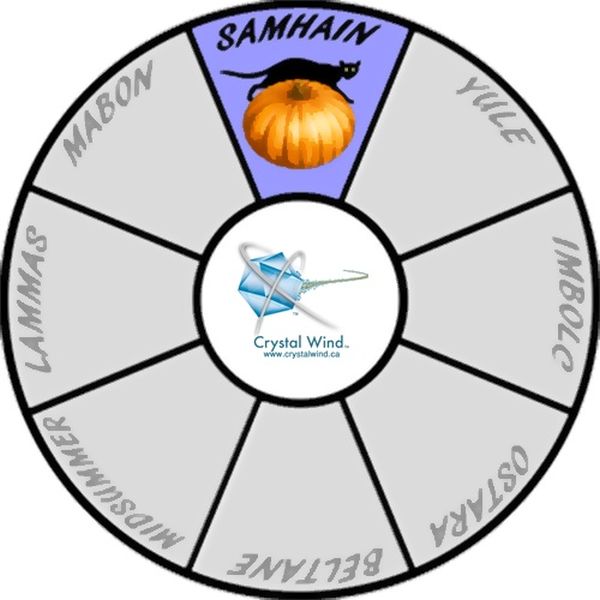
On the elaborate Wheel of the Year, Samhain sits directly opposite Beltane. The symbolism is striking—Beltane, celebrated in May, is vibrant, focused on new life, fertility, warm sun, and the rising energy of growth. Samhain, in contrast, asks us to slow down. Days shorten, leaves tumble from the trees, and for centuries, communities have gathered to mark the end of the growing season. Crops are collected, fields are left to rest, and families prepare for chilly months ahead. As fields empty and nature seems to fade, Samhain presents a moment not of sorrow but of acceptance and appreciation—a gentle nod to all living things that must one day return to the earth.

While it’s often thought of as the “Witches’ New Year,” the meaning of Samhain goes beyond anything ominous or spooky. Traditions surrounding Samhain are about respect: for the land, for the turn of the seasons, and for those loved ones who have walked on before us. In ancient stories, Samhain was a liminal time, a moment when the usual boundaries between our reality and the spirit world grew thin. Many believed it was possible to communicate with those who had passed, or at the very least, feel their presence a bit more keenly.

In some communities, bonfires lit the hills on Samhain night. These fires offered protection and light as darkness closed in. Families walked the perimeters of their homes with lanterns, herbs, or salt as a way of ensuring that only positive spirits could visit. Even today, many people feel a mysterious sense of closeness to the past during this season, when the air itself seems charged with memory.

It’s not uncommon for people to remember the departed more vividly at this time of year. Whether you’ve adopted any specific ritual or not, there’s a certain comfort in sharing stories and keeping loved ones alive in memory. Communities old and new gather to honor the dead, not just in solemn silence but through music, food, and joyful acts that keep those bonds strong.

Modern Interpretation

In today’s world, Samhain continues to hold deep meaning, regardless of how much or little you keep to tradition. For many, it’s become a time for personal and communal rituals that renew the sense of connection—with nature, with ancestors, and with ourselves. As the veil between worlds is said to grow thinner, people focus on remembering and celebrating the lives that have shaped their own.

One simple way to acknowledge Samhain is by setting aside a physical space—a small table, mantle, or shelf—where you gather photos, keepsakes, or favorite objects belonging to friends, relatives, or pets who have passed. Add candles, autumn leaves, or little fairy lights to create a warm and welcoming altar. Some families also set out seasonal foods, or special dishes that their loved ones enjoyed in life. Rather than a somber memorial, this is meant to be a true celebration, a moment to talk, laugh, and even dance in their honor.

Guests at a Samhain gathering are usually invited to contribute joyful stories or treasured memories. It’s common to hear music—sometimes the very songs that once uplifted the spirits of those now remembered. Favorite foods are shared, games are played, and the kitchen and living room fill with bright energy. For a night, it almost seems the people who meant the most will walk among us again, their laughter blending in with our own.

Not everyone expects to see spirits, of course, but Samhain has a way of bringing subtle signs. A fleeting scent on the air, a sense of movement just out of sight, or an unexpected sound can trigger powerful recollections. Even the most skeptical people sometimes report feeling the unique presence of a beloved person or animal, especially in those quiet moments between dusk and midnight. Pets, in particular, are said to visit us as soft nudges or distant paw-steps, reminding us that the bonds of love do not end.

If you’re unsure how to mark Samhain, the simplest acts can be meaningful. Light a candle in memory of someone special, prepare a dish they loved and share it with friends, write a letter or poem to those who have gone, or take a quiet walk outdoors and let your mind drift to the past. In doing so, you honor not only them, but also your own roots and the turning of the seasons.

Throughout the world, cultures have their own late autumn rituals—All Souls’ Day, Día de los Muertos, ancestral festivals in Eastern Europe and Asia—all echoing similar themes: gratitude, remembrance, and community. While each practice is shaped by local history and belief, the underlying humanity is universal. We gather, we remember, we comfort each other through story and song as the darkness rises.

Samhain can be as simple or elaborate as you want it to be. Some prefer to observe in solitude, perhaps reading old letters or favorite books by candlelight. Others host large themed parties, with costumes, games, pumpkin carving, and group rituals under the stars. What matters most is the spirit of togetherness and the willingness to cherish those who shaped your life.

As autumn gives way to winter, and as the harvest is tucked away, Samhain gently reminds us to hold fast to memory and kinship. Whether you celebrate through age-old traditions or invent one that fits your own family, it’s a time to honor the thin places—the moments of connection that carry us forward, year after year, even as seasons and generations change.


hr style="border: 1px solid #4682b4; width: 50%; margin: 8px auto;" />

© 2010-2025. All original wisdom belongs to its creator. CrystalWind.ca honors this truth by adding design, formatting, and imagery to uplift your experience. Please respect the creator’s rights—redistribution or commercial use is not permitted without permission.


Pin It

Liked this article? Dive deeper into personal growth and wellness! Check out CrystalWind.ca for spiritual wisdom or explore AromaWorx.ca for natural well-being tips. Spread the positivity—share this with friends on their happiness journey!

Let’s Chat! Drop Your Thoughts Below! Scroll down to comment

Keep CrystalWind.ca free—your gift matters now!
Help us spread light today. Thank you, supporters!

Follow this blog

Thank You for Visiting CrystalWind!

We’re honored to be part of your journey.

Share your thoughts at .

Let’s grow together!

The Crystal Wind Oracle App
Shatter Illusions – Gain Clarity Now!
Instant Access On:

Apple | Android | Amazon
New! 53-Card Deck for Deeper Wisdom

Imagine a world of inspiration and healing, free for all—made possible by YOU!
Donate Now—Ignite the Magic at CrystalWind.ca!


Support CrystalWind.ca Today!

Unlock Your Light: Join Lightworkers Worldwide on CrystalWind.ca!

Call For Writers

Call For Writers!

Articles: Wiccan Wheel of the Year

Follow Us!

Featured This Month

Page:

Sun in Sagittarius

Sun in Sagittarius

An Overview of Sun Sign Characteristics for Sagittarius At the heart of Sagit... Read more

Birth Totem - Owl

Birth Totem - Owl

Birth Totem Owl Birth dates: November 23 - December 21 Birth Totem: Owl Read more

Twas The Night Before Yuletide

Twas The Night Before Yuletide

Yule Chant Brightly burns the Yule log tonight Magic dances in firelight Ho... Read more

Yule - The Winter Solstice

Yule - The Winter Solstice

In the Pagan and Wiccan traditions, Yule, or the Winter Solstice, is celebrate... Read more

Sagittarius Mythology

Sagittarius Mythology

The Sagittarius Myth Other than Virgo, the Sagittarius myth is probably the... Read more

Yule

Yule

Yule Ritual Celebrated on the Winter Solstice, around December 21 each year.... Read more

Obsidian

Obsidian

The Protection Stone As a stone that emerges with dramatic force from the d... Read more

Yule By The Hedgewitch

Yule By The Hedgewitch

Yule Yule is a solar festival and one of the Minor Sabbats. This is when the ... Read more

Yule Blessings

Yule Blessings

Yule The Winter Solstice or Yule is one of the Lesser Wiccan Sabbats, and it ... Read more

Winter Solstice - A Season of Giving

Winter Solstice - A Season of Giving

CELEBRATING THE WINTER SOLSTICE The December solstice is also known as the ... Read more

Turquoise

Turquoise

The Master Healer Stone As a blue stone with a hint of green, turquoise wor... Read more

Gods and Monsters of the Winter Solstice

Gods and Monsters of the Winter Solstice

Because Santa Claus has presided over the Yule festival for the last two hundr... Read more

Sodalite

Sodalite

The Logic Stone Sodalite works well in unison with the throat and brow chak... Read more

Sagittarius

Sagittarius

Nov 22 - Dec 21 Spirit: Meeting competition Ego: Independent, studious, in... Read more

Long Snows Moon

Long Snows Moon

Elk – Obsidian – Black Spruce – Black November 22 to December 21 The Long ... Read more

X

Right Click

No right click