
Winter Solstice - A Season of Giving
- Details
- Written by CrystalWind.ca
- Views: 10846
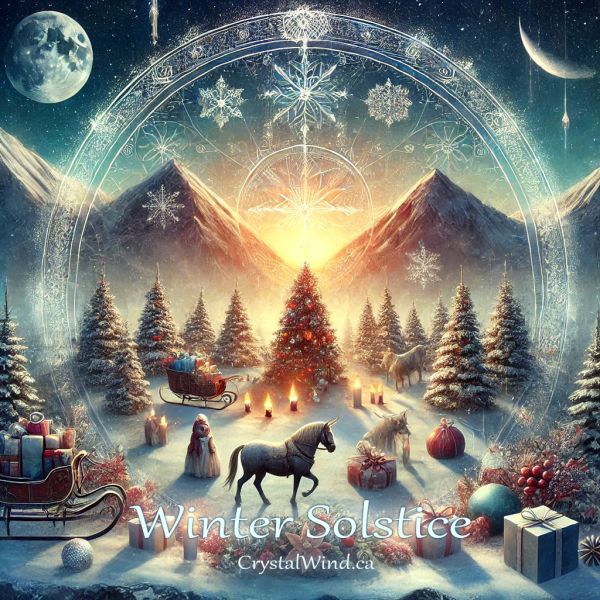
CELEBRATING THE WINTER SOLSTICE
The December solstice is also known as the winter solstice in the northern hemisphere and the summer solstice in the southern hemisphere due to the seasonal differences.
“Winter Solstice has been celebrated in cultures the world over for thousands of years. This start of the solar year is a celebration of Light and the rebirth of the Sun. In old Europe, it was known as Yule, from the Norse, Jul, meaning wheel. Today, many people in Western-based cultures refer to this holiday as “Christmas.” Yet a look into its origins of Christmas reveals its Pagan roots. Emperor Aurelian established December 25 as the birthday of the “Invincible Sun” in the third century as part of the Roman Winter Solstice celebrations. Shortly thereafter, in 273, the Christian church selected this day to represent the birthday of Jesus, and by 336, this Roman solar feast day was Christianized. January 6, celebrated as Epiphany in Christendom and linked with the visit of the Magi, was originally an Egyptian date for the Winter Solstice.
Most of the customs, lore, symbols, and rituals associated with “Christmas” actually are linked to Winter Solstice celebrations of ancient Pagan cultures. While Christian mythology is interwoven with contemporary observances of this holiday time, its Pagan nature is still strong and apparent. Pagans today can readily re-Paganize Christmastime and the secular New Year by giving a Pagan spiritual focus to existing holiday customs and by creating new traditions that draw on ancient ways. Here are some ways to do this:
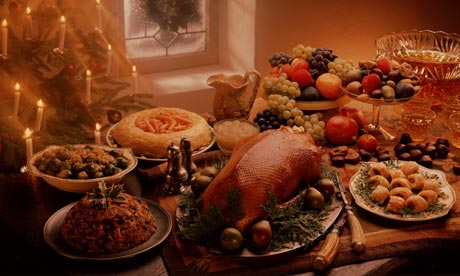
Celebrate Yule with a series of rituals, feasts, and other activities. In most ancient cultures, the celebration lasted more than a day. The ancient Roman Saturnalia festival sometimes went on for a week. Have Winter Solstice Eve and Day be the central focus for your household, and conceptualize other holiday festivities, including New Year’s office parties and Christmas visits with Christian relatives, as part of your Solstice celebration. By adopting this perspective, Pagan parents can help their children develop an understanding of the multicultural and interfaith aspects of this holiday time and view “Christmas” as just another form of Solstice. Have gift exchanges and feasts over the course of several days and nights as was done of old. Party hearty on New Year’s Eve not just to welcome in the new calendar year, but also to welcome the new solar year.
Adorn the home with sacred herbs and colors. Decorate your home in Druidic holiday colors red, green, and white. Place holly, ivy, evergreen boughs, and pine cones around your home, especially in areas where socializing takes place. Hang a sprig of mistletoe above a major threshold and leave it there until next Yule as a charm for good luck throughout the year. Have family/household members join together to make or purchase an evergreen wreath. Include holiday herbs in it and then place it on your front door to symbolize the continuity of life and the wheel of the year. If you choose to have a living or a harvested evergreen tree as part of your holiday decorations, call it a Solstice tree and decorate it with Pagan symbols.
Convey love to family, friends, and associates. At the heart of Saturnalia was the custom of family and friends feasting together and exchanging presents. Continue this custom by visiting, entertaining, giving gifts, and sending greetings by mail and/or phone. Consider those who are and/or have been important in your life and share appreciation.
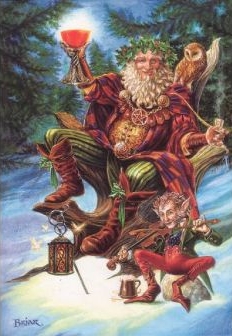
Reclaim Santa Claus as a Pagan Godform. Today’s Santa is a folk figure with multicultural roots. He embodies characteristics of Saturn (Roman agricultural god), Cronos (Greek god, also known as Father Time), the Holly King (Celtic god of the dying year), Father Ice/Grandfather Frost (Russian winter god), Thor (Norse sky god who rides the sky in a chariot drawn by goats), Odin/Wotan (Scandinavian/Teutonic All-Father who rides the sky on an eight-legged horse), Frey (Norse fertility god), and the Tomte (a Norse Land Spirit known for giving gifts to children at this time of year). Santa’s reindeer can be viewed as forms of Herne, the Celtic Horned God. Decorate your home with Santa images that reflect His Pagan heritage.
Honor the Goddess as Great Mother. Place Pagan Mother Goddess images around your home. You may also want to include one with a Sun child, such as Isis with Horus. Pagan Goddess forms traditionally linked with this time of year include Tonantzin(Native Mexican corn mother), Holda(Teutonic earth goddess of good fortune), Bona Dea (Roman women’s goddess of abundance and prophecy), Ops (Roman goddess of plenty), Au Set/Isis (Egyptian/multicultural All Goddess whose worship continued in Christian times under the name Mary), Lucina/St. Lucy (Roman/Swedish goddess/saint of light), and Befana (Italian Witch who gives gifts to children at this season).
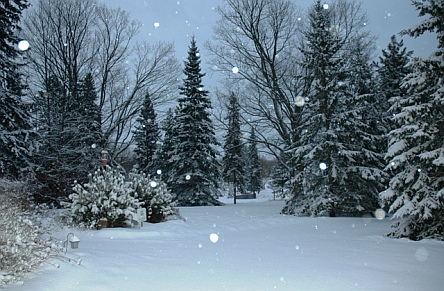
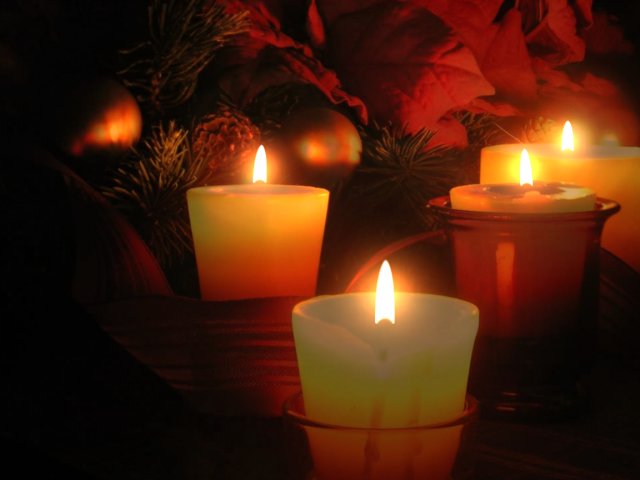
Honor the new solar year with light. Do a Solstice Eve ritual in which you meditate in darkness and then welcome the birth of the sun by lighting candles and singing chants and Pagan carols. If you have an indoor fireplace or an outdoor fire circle, burn an oak log as a Yule log and save a bit to start next year’s fire. Decorate the inside and/or outside of your home with electric colored lights. Because of the popularity of five pointed stars as holiday symbols, this is a good time to display a pentagram of blue or white lights.
Contribute to the manifestation of more wellness on Planet Earth. Donate food and clothing to poor in your area. Volunteer time at a social service agency. Put up bird feeders and keep them filled throughout the winter to supplement the diets of wild birds. Donate funds and items to non-profit groups, such as Pagan/Wiccan churches and environmental organizations. Meditate for world peace. Work magic for a healthier planet. Make a pledge to do some form of good works in the new solar year.”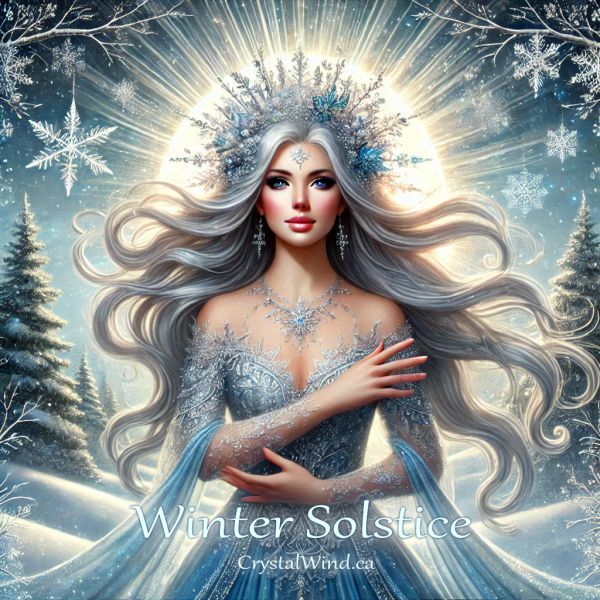
- Campanelli, Pauline & Dan, Wheel of the Year: Living the Magical Life. St. Paul: LLewellyn, 1989, pages 1-16.
- Crim, Keith, editor, The Perennial Dictionary of World Religions. San Francisco: Harper & Row, 1989, pages 154, 182.
- Ek, Hildur, Jul Tomtar, Jul Bockar and Sheaves of Grain. Lindsborg, KS: Barbos Printing, 1983.
- Farrar, Janet & Stewart, Eight Sabbats for Witches. London: Hale, 1981, chapter 11.
- Funk & Wagnalls, Standard Dictionary of Folklore, Mythology and Legend. New York: Funk & Wagnalls, 1979, pages 229-230, 974-975,
- Royale, Duncan, History of Santa: from 2000 BC to the 20th Century. Fullerton, CA: M. E. Duncan, 1987.
- Scullard, H. H., Festivals and Ceremonies of the Roman Republic. Ithaca, NY: Cornell University Press, 1981. pages 205-212.
Article by Selena Fox – Circle Sanctuary.
© 2011-2025. All original wisdom belongs to its creator. CrystalWind.ca honors this truth by adding design, formatting, and imagery to uplift your experience. Please respect the creator’s rights—redistribution or commercial use is not permitted without permission.

Enjoyed this article? Continue your journey with AromaWorx – wellness & aromatherapy , and support us at Support Crystal Wind™ .
Share your thoughts below! 
Recommended Tools & Resources
As an Amazon Associate we earn from qualifying purchases.
Keep CrystalWind.ca free—your gift matters now!
Help us spread light today. Thank you, supporters!

Support CrystalWind
Free spiritual inspiration since 2008
Help keep CrystalWind free and growing with a small contribution.
Buy us a coffee
Donate with PayPal


Latest Articles


✨ Digital Treasures ✨
The Crystal Wind Oracle
58-card deck • Lisa Iris art • ⭐⭐⭐⭐⭐
58-card deck • Lisa Iris art • ⭐⭐⭐⭐⭐
Crystal Lover's Handbook
67 crystals A–Z • chakras • healing uses
67 crystals A–Z • chakras • healing uses
Alchemy of Consciousness
Shift your reality from the inside out
Shift your reality from the inside out
Messages from the Archangels
Channeled guidance for your path
Channeled guidance for your path
Starseed Field Guide
Your mission • your origins • your tribe
Your mission • your origins • your tribe
Crystal & Mineral Wallchart
50+ stones • quick-reference • printable
50+ stones • quick-reference • printable
Complete Zodiac Collection
12 Lisa Iris prints • frame it • gift it
12 Lisa Iris prints • frame it • gift it
Zazzle Shop
Prints • posters • puzzles • gifts
Prints • posters • puzzles • gifts
Support CrystalWind.ca
Keep the light on • you have our gratitude
Keep the light on • you have our gratitude
✦ CRYSTAL WIND™ NETWORK ✦
- ✦ AscensionPulse.com — Ascension News
- ✦ LisaIris.com — Visionary Art
- ✦ ReikiWorks.ca — Energy Healing
- ✦ AromaWorX.ca — Aromatherapy
- ✦ Universal.net — Connecting the World
- ✦ NoBody.com — Be a Nobody

The Physical Card Deck
Dive into the Mystical World of the Crystal Wind Oracle Deck! Get All the Enchanting Details Now!
Grab Your Deck Now!NEW Expanded Boxed Edition!
Now with 58 Cards for Richer Wisdom!
The Mobile App
Shatter Illusions - Gain Clarity Now!
Instant Access On:
New! 53-Card Deck for Deeper Wisdom
See What Users Are Raving About!



Quake Watch
Articles: Wiccan Wheel of the Year
Thank You for Visiting CrystalWind!
We’re honored to be part of your journey.
Let’s grow together!
If this space has been meaningful, support it here.
Featured This Month
Page:
Harvest Moon
“Discover how these totems foster balance” ~Crystal Wind Standing at the thre... Read more
Mabon Magic: Ideas For Fall Decoration And R…
Welcome to the season of Fall! As we turn the Great Wheel toward autumn in t... Read more
Sun in Virgo
“Discover how order becomes living grace” ~Crystal Wind This long-form Virgo ... Read more
Crystals for Virgo
As the warmth of summer begins to soften into the crispness of autumn, the Sun... Read more
Virgo Mythology
“Discover why Virgo embodies pure self-sufficiency” ~Crystal Wind The ancient... Read more
Birth Totem - Bear
“Discover why Bear totem brings deep wisdom” ~Crystal Wind Read Time: 6 min |... Read more
Mabon in Modern Times: Fresh Takes on the Au…

The Mabon season begins somewhere around the 21st-22nd of September and cont... Read more
Peridot: The Healer's Stone
Peridot has been used as a Power Stone for centuries. Peridot fosters emotio... Read more
Watermelon Tourmaline
“Discover how rare crystals heal the heart” ~Crystal Wind This rare variety o... Read more
The Vine: September 2nd - September 29th
“Discover how swan grace steadies restless hearts” ~Crystal Wind As the wheel... Read more
Sweet Violet
“Discover how violets awaken faithful heart powers” ~Crystal Wind These quiet... Read more

Virgo's Featured Stone - Sugilite
“Discover how sugilite builds lasting confidence” ~Crystal Wind In the realm ... Read more